Terjemahan

When a PE bag tears in use, the first response is often to increase film thickness. However, PE film tearing easily does not always mean the film is simply too thin. The failure may begin at a sharp product edge, a thin gauge spot, a seal, a small defect, or because the resin formulation is not suited to the application.
The most useful first step is to identify where the failure starts. A tear that begins at a metal corner requires a different solution from one that consistently begins at the bottom seal.
1. Sharp Product Edges Create Puncture
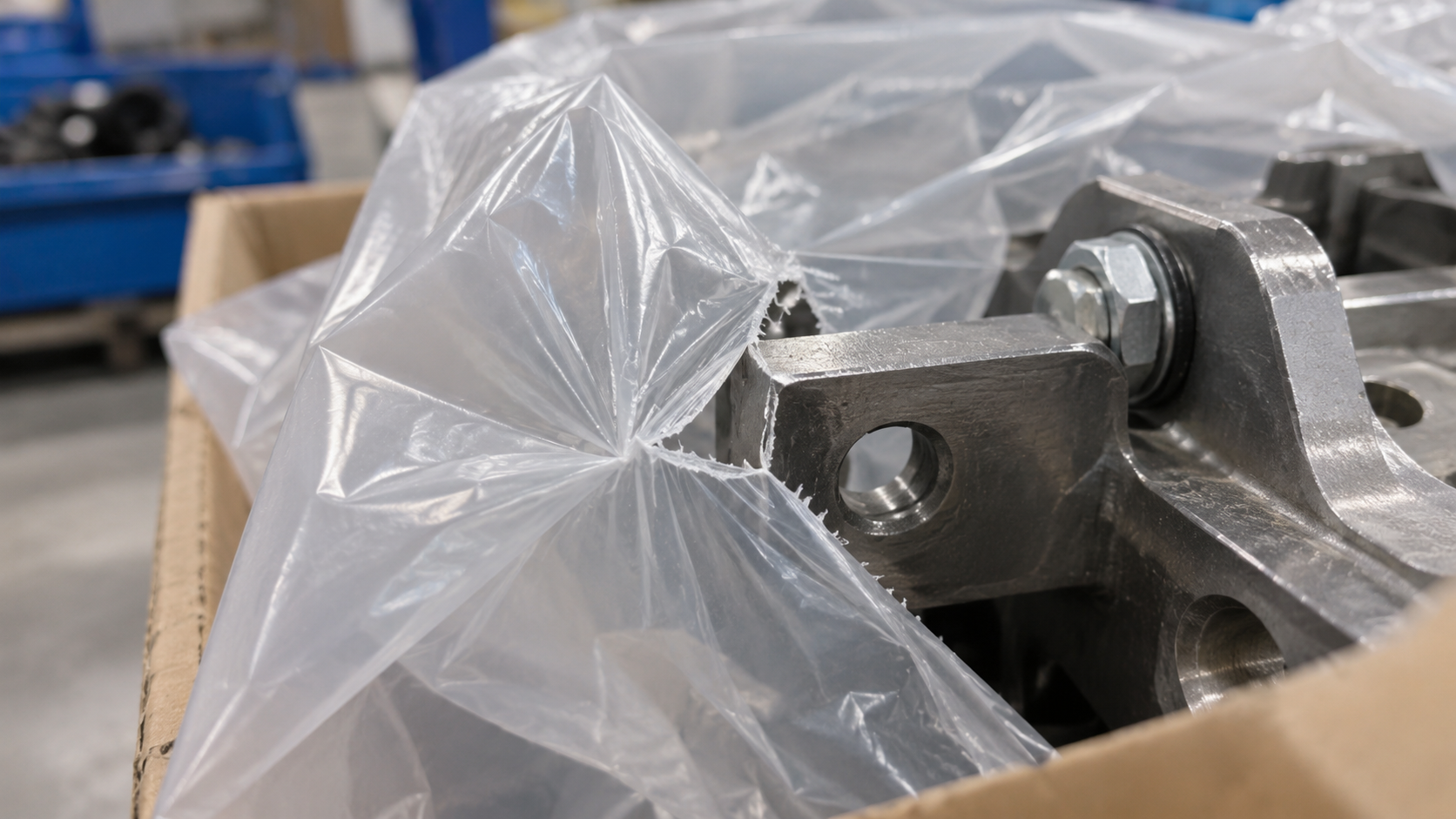
Bolts, gears, brackets, machined parts, and products with protruding corners concentrate force over a very small area. The film may first fail by puncture. Once a hole or cut exists, that damage can then develop into a larger tear.
This is why tensile strength alone does not describe performance around sharp parts. Puncture resistance and tear propagation after the film has been damaged are also important.
2. The Film Gauge Is Too Low for the Handling Conditions
Thickness still matters. A thin film contains less material to absorb load, friction, and deformation.
The required gauge should reflect actual conditions: product weight, whether the bag is lifted by the film, stacking pressure, transportation, and repeated rubbing between the product and the packaging.
Dynaplast's PE film thickness guide by application can be used as a starting point, followed by a sample trial using the actual component.
3. The Resin or Formulation Is Not Suitable
HDPE, LDPE, and LLDPE do not provide identical mechanical behavior. LLDPE is commonly considered where flexibility and toughness are important, while HDPE provides a relatively stiffer film.
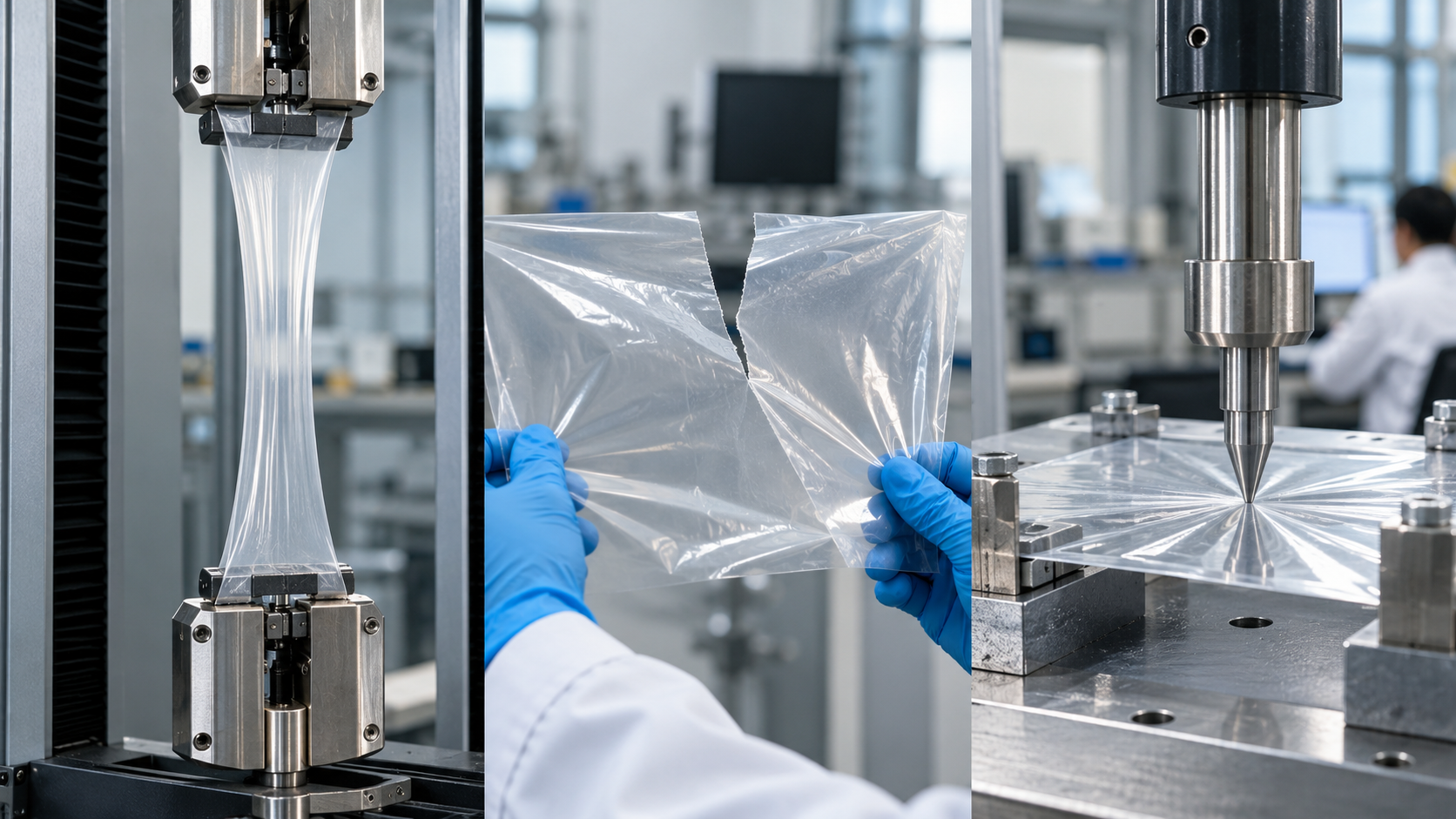
Performance also varies significantly between grades within the same polymer family. Resin technical data sheets typically report tensile, Elmendorf tear, dart impact, and puncture separately because they describe different failure mechanisms.
For demanding products, resin selection and blending can therefore be as important as adding more microns.
4. Film Thickness Is Not Uniform
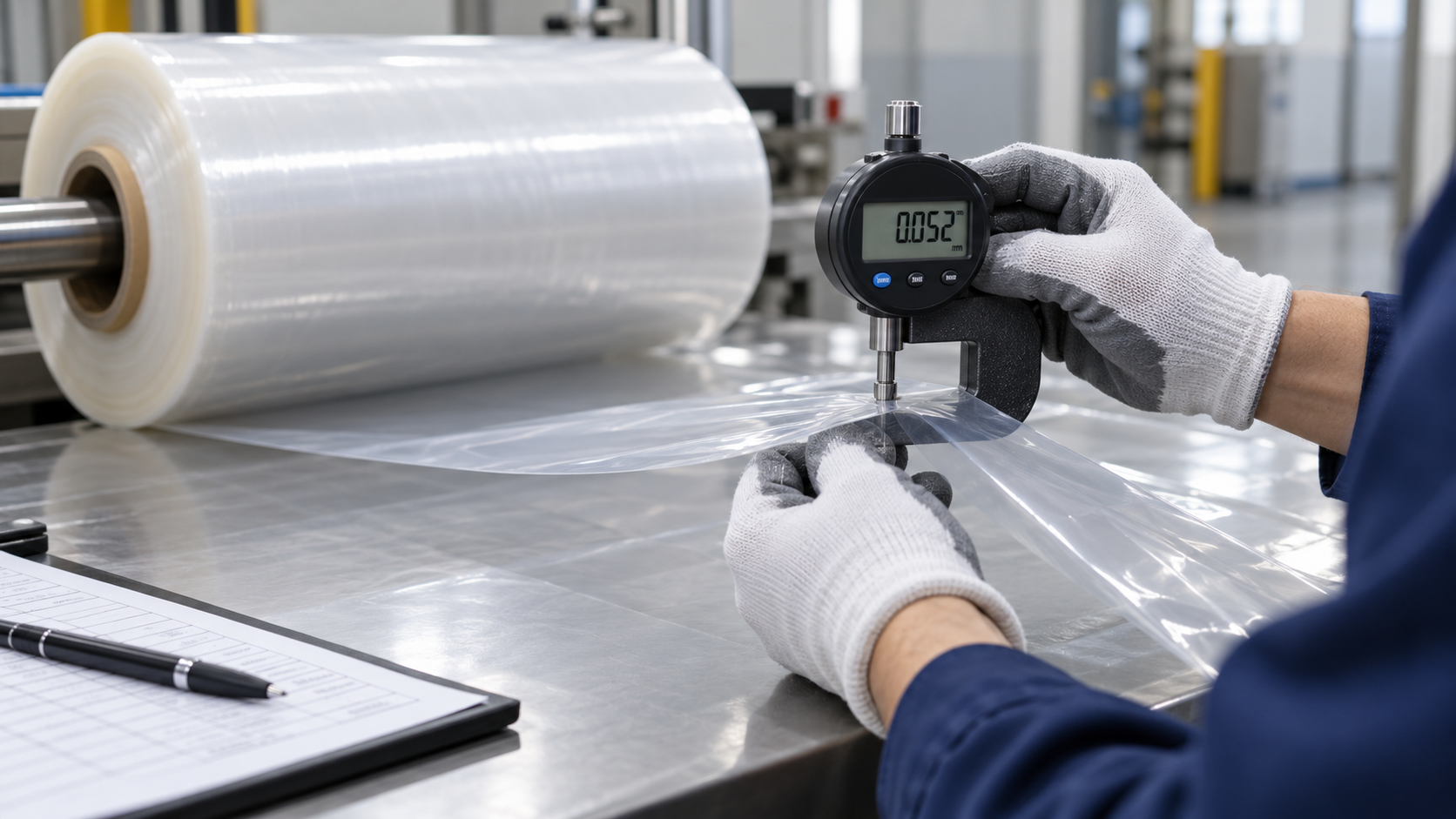
A nominal 60-micron film is a target thickness. It does not mean every location is exactly 60 microns.
Blown film can vary in both the machine direction and transverse direction due to die conditions, bubble behavior, cooling, and other process variables. ASTM D8136 specifically addresses plastic film thickness variability for quality control and buyer-seller communication.
If one region is significantly thinner, it may become the first point of failure.
5. Film Orientation Affects Tear Direction
During blown-film production, the polymer is drawn upward in the machine direction while the bubble expands laterally. This creates orientation and means MD and TD properties can be different.
For this reason, film data sheets normally report MD and TD tear strength separately. ASTM D1922 is one method used to characterize propagation tear resistance.
If the bag design consistently applies stress in one direction, orientation can affect how easily an existing cut propagates.
6. Small Defects Can Become Tear Initiation Points
A large tear often begins with a very small flaw. Rough cut edges, pinholes, gels, contamination, scratches, or damage during packing can behave like a notch.
Stress becomes concentrated at this point and the tear can propagate. Inspecting the original initiation point is therefore often more useful than only examining the final size of the tear.
7. The Failure May Actually Be the Seal
If bags repeatedly fail along the bottom or side seal, the primary problem may be seal strength rather than film tear resistance.
Seal temperature, pressure, dwell time, contamination, wrinkles, and sealing-bar condition can all affect consistency. ASTM F88/F88M is widely used to measure the force required to separate seals in flexible materials.
How Should You Diagnose the Problem?
Before simply increasing gauge:
- Identify the exact tear initiation point.
- Check whether puncture occurred first.
- Measure thickness at several locations.
- Look for a repeated MD or TD failure pattern.
- Inspect seals and cut edges.
- Trial an alternative resin or film formulation if needed.
Related Reading
- Puncture Resistance vs Tear Strength vs Tensile Strength: What Is the Difference?
- PE Film Thickness Guide by Application
- Product Specification
Conclusion
PE film can tear because of a combination of puncture, insufficient gauge, resin selection, orientation, gauge variability, defects, and sealing conditions. More thickness can help, but it is not always the most efficient answer.
Industrial buyers should first identify the failure mode and then adjust the film specification. Dynaplast's guide to HDPE, LDPE, and LLDPE selection provides useful background before testing a revised packaging structure on the actual product.