Terjemahan
Virgin PE vs Recycled PE: Quality, Appearance and Applications
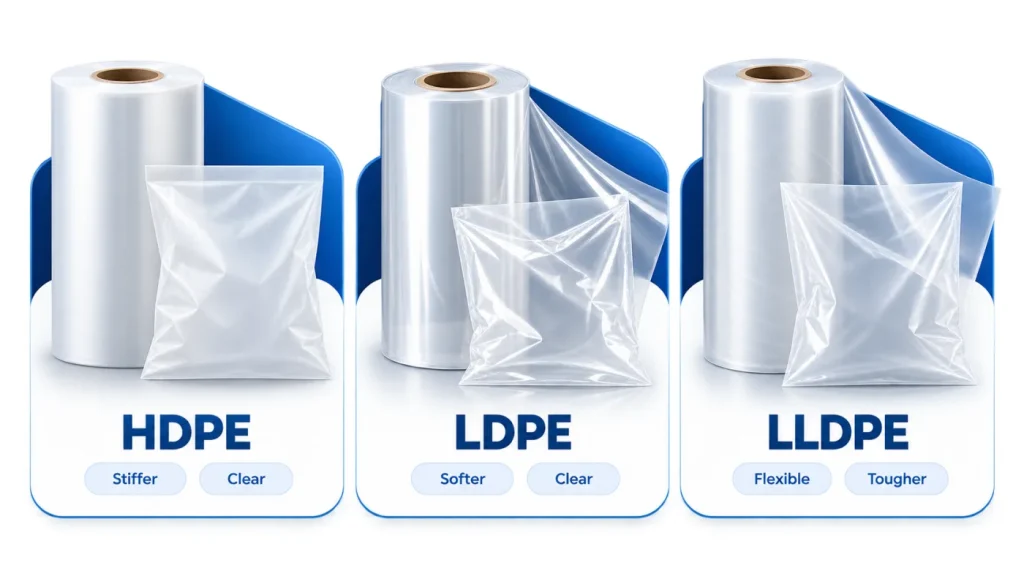
Understand when virgin or recycled PE is suitable and what industrial packaging buyers should check before ordering.
What Is Blown Film Extrusion? From PE Resin to Plastic Film
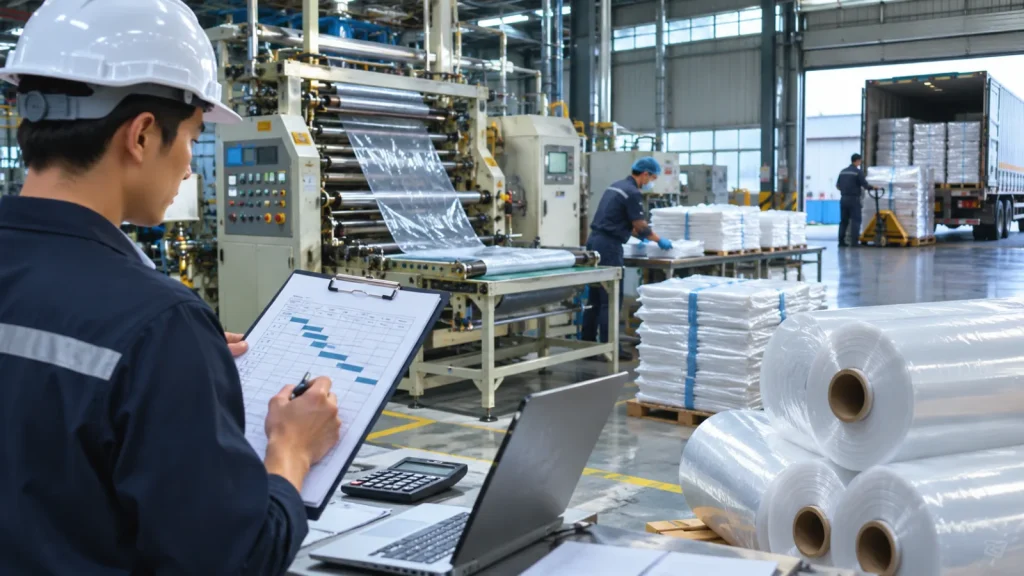
A practical explanation of blown film extrusion and how PE pellets become industrial film rolls and bags.
PE Film Roll vs Sheet vs Tubing vs Bag: Key Differences
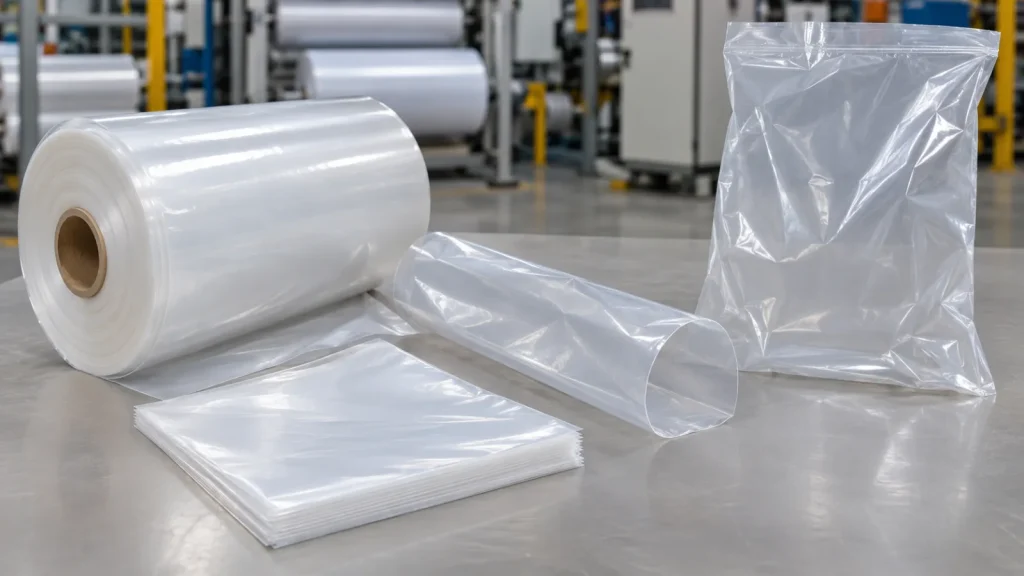
Compare PE film rolls, sheets, tubing and finished bags for industrial packing and converting processes.
HDPE vs LLDPE Industrial Bags: When to Choose Each
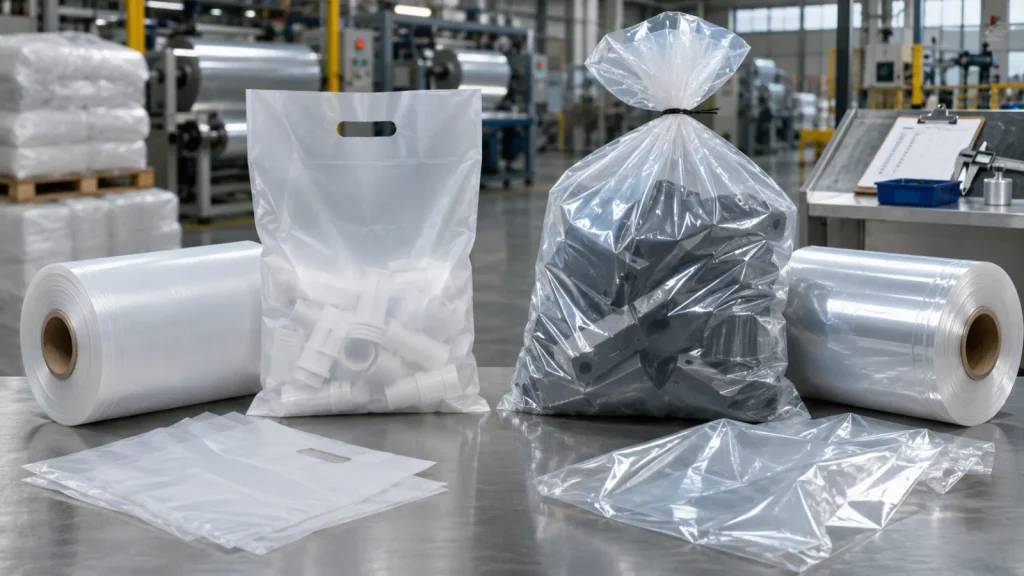
A practical guide to choosing HDPE or LLDPE industrial bags based on stiffness, puncture, loading and total cost.
LDPE vs LLDPE: Flexibility, Strength and Heat-Seal Performance
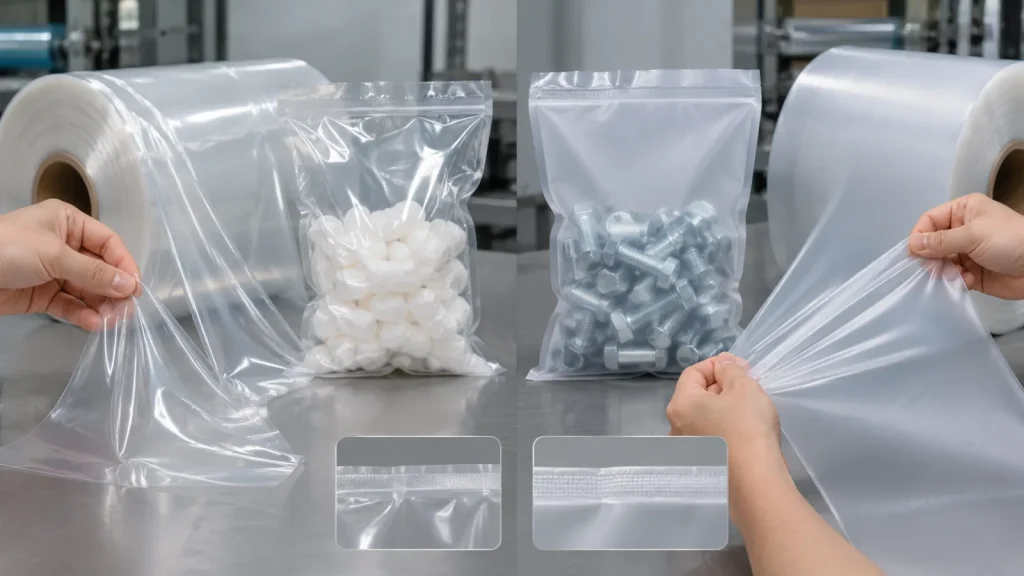
A buyer-focused comparison of LDPE and LLDPE film based on softness, toughness, puncture resistance and sealing.
What Is Metallocene PE? When Is It Better Than Conventional LLDPE?
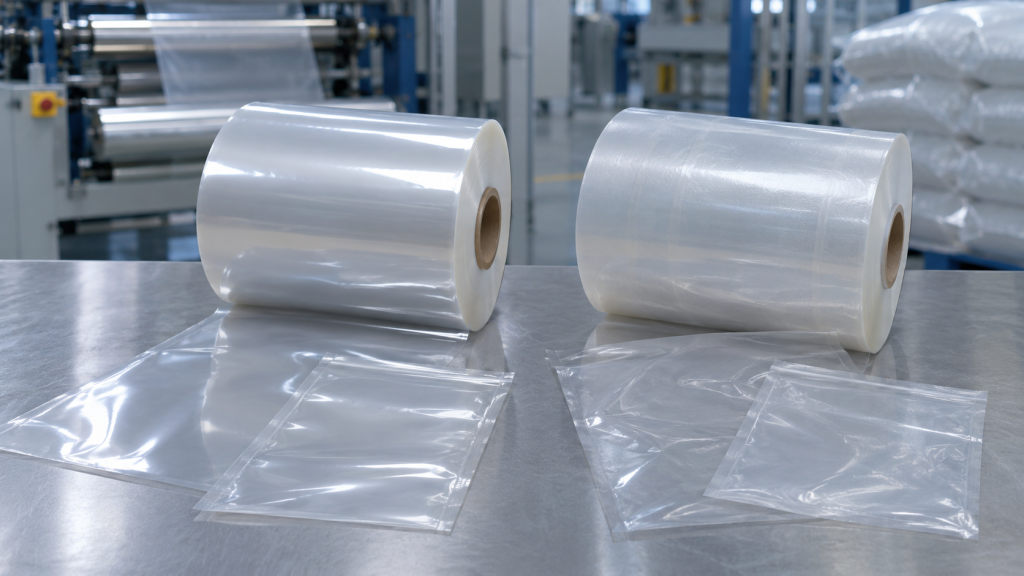
Metallocene PE is produced using a different catalyst platform. Depending on the grade, mPE can offer useful combinations of toughness, puncture, optics, and sealing.
Corona Treatment and Dyne Level: Why Printing Does Not Stick to PE Film
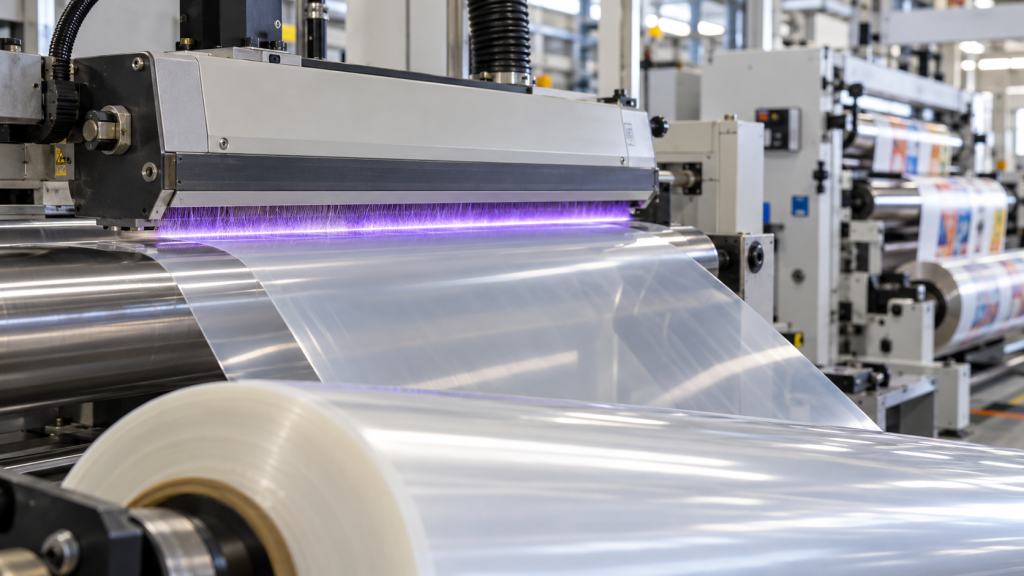
PE film has naturally low surface energy, which can make printing and adhesive bonding difficult. Corona treatment improves wettability, but dyne level must suit the actual process.
What Is Anti-Block in PE Film? Why Plastic Bags Can Stick Together
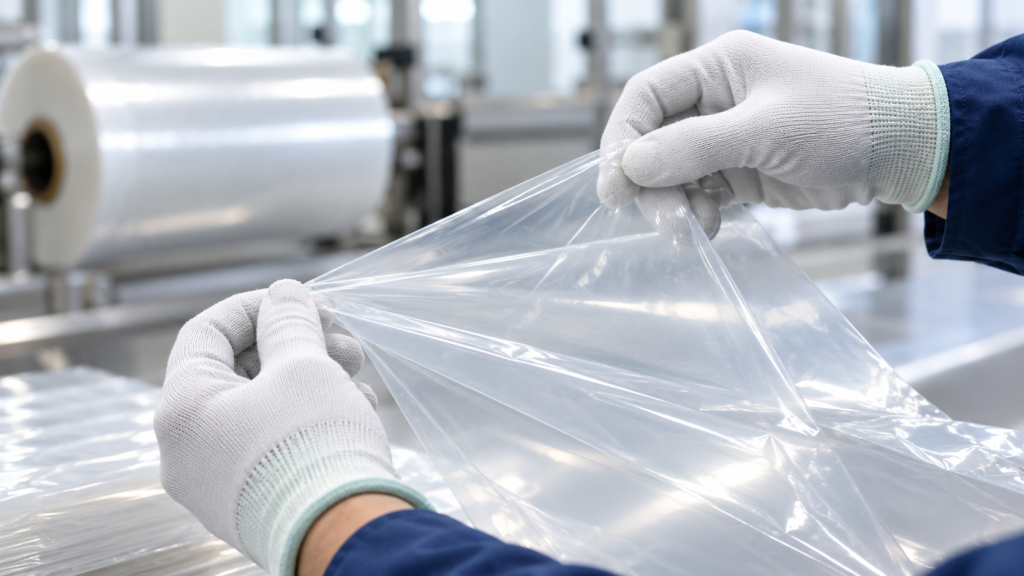
Blocking occurs when adjacent PE film layers adhere too strongly during storage. Anti-block helps separate surfaces but performs a different function from slip.
What Are Slip and COF in PE Film? Why Film Can Be Too Slippery or Too Grippy
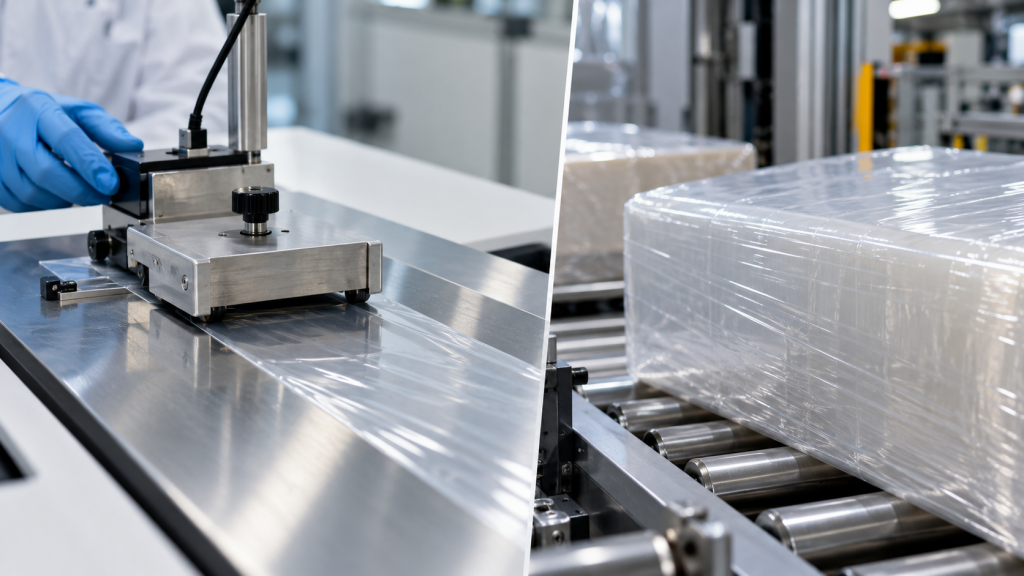
COF controls how easily PE film slides against itself or another surface. Values that are too high or too low can disrupt packaging and converting.
PE Film Thickness Tolerance: Why Micron Is Not Identical Everywhere
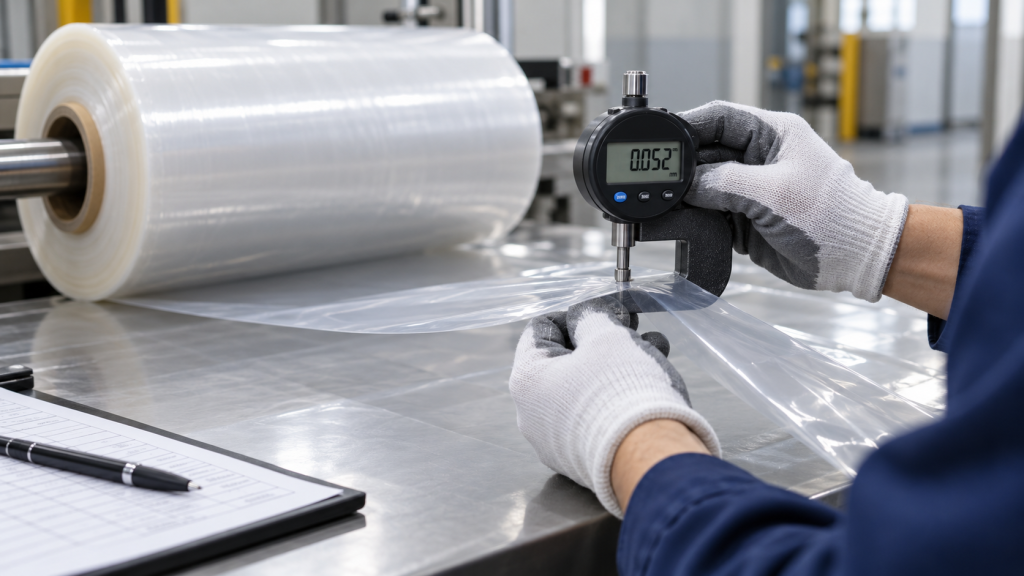
Nominal micron is a target thickness, not an identical reading at every point. Learn why gauge varies and how buyers can specify tolerance and sampling.