Terjemahan

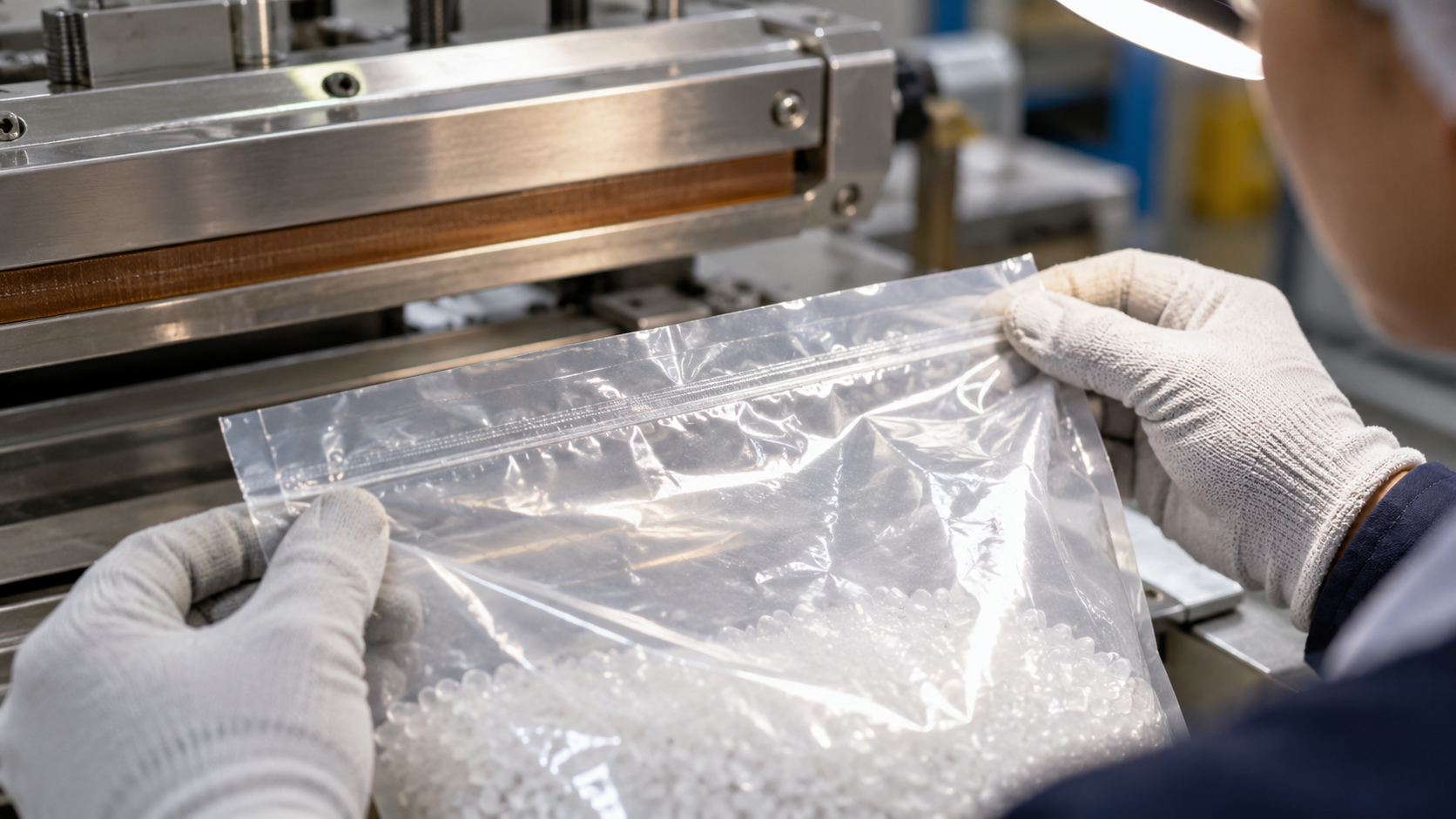
A bag can use the correct polymer and sufficient film thickness and still fail if the seal is poorly formed. In industrial applications, PE bag seals that leak or peel apart can lead to product returns, contamination, loss of protection, or components falling out during handling.
A good seal is more than a clean-looking line. It needs consistent strength across its width and enough performance for the actual load and distribution conditions. When leakage is recurring, several variables should be checked before simply increasing film gauge.
1. Seal Temperature Is Too Low
Heat sealing requires the film surfaces to reach conditions where the two layers can form a bond.
If temperature is too low, the surfaces may only partially join. The seal can look acceptable but open when pulled or when the package is loaded.
Different resin families and grades have different seal initiation behavior, so a setting that works well for one film may not work for another.
2. Seal Temperature Is Too High
More heat is not always better.
Excessive temperature can soften the film too much, thin the material in the seal area, create distortion, or produce wrinkles. In some cases, the bond appears very strong but the film becomes weak immediately beside the seal and fails there under load.
The objective is to establish a stable processing window rather than simply running the highest possible temperature.
3. Pressure or Dwell Time Is Incorrect
Two other major sealing variables are pressure and dwell time, the amount of time the film remains under the sealing bar.
Uneven pressure can create a seal that is strong on one side and weak on the other. Dwell time that is too short may not transfer enough heat through the film, particularly as gauge increases.
4. Dust, Oil, Moisture, or Product Is Trapped in the Seal
A seal depends on direct contact between the two film surfaces.
Powder, dust, grease, machining oil, moisture, excessive trapped air, or product caught in the seal area can interfere with that contact. For industrial component packaging, even a small amount of process oil inside the bag can contribute to seal leakage.
If failures occur only with particular product batches, the surface condition at packing should be investigated.
5. The Film Is Wrinkled
A wrinkle creates multiple layers in one location while neighboring areas remain at the normal two-layer thickness.
Heat and pressure are then distributed unevenly across the seal. This can happen when the bag is oversized, the product is inserted too quickly, or the film is not properly aligned before sealing.
6. The Film Formulation Does Not Match the Sealing Process
Polyethylene type and resin grade influence melting behavior and seal performance.
LDPE is commonly associated with straightforward heat sealing in many applications, while LLDPE and performance polyethylene grades can be selected to combine toughness with specific sealing behavior. Some modern grades are designed for low seal-initiation temperatures and high seal performance.
If a packaging line operates at high speed or within a narrow processing window, resin selection becomes part of the sealing specification.
7. The Sealing Bar or PTFE Cover Is in Poor Condition
The film is not always the source of the defect.
A dirty or uneven sealing bar, unstable heater, inaccurate temperature sensor, or worn PTFE cover can produce inconsistent heat and pressure.
If leaks repeatedly appear at the same position across the seal width, tooling condition should be one of the first items inspected.
How Is Seal Strength Evaluated?
Visual inspection is useful but may not be sufficient for critical packaging.
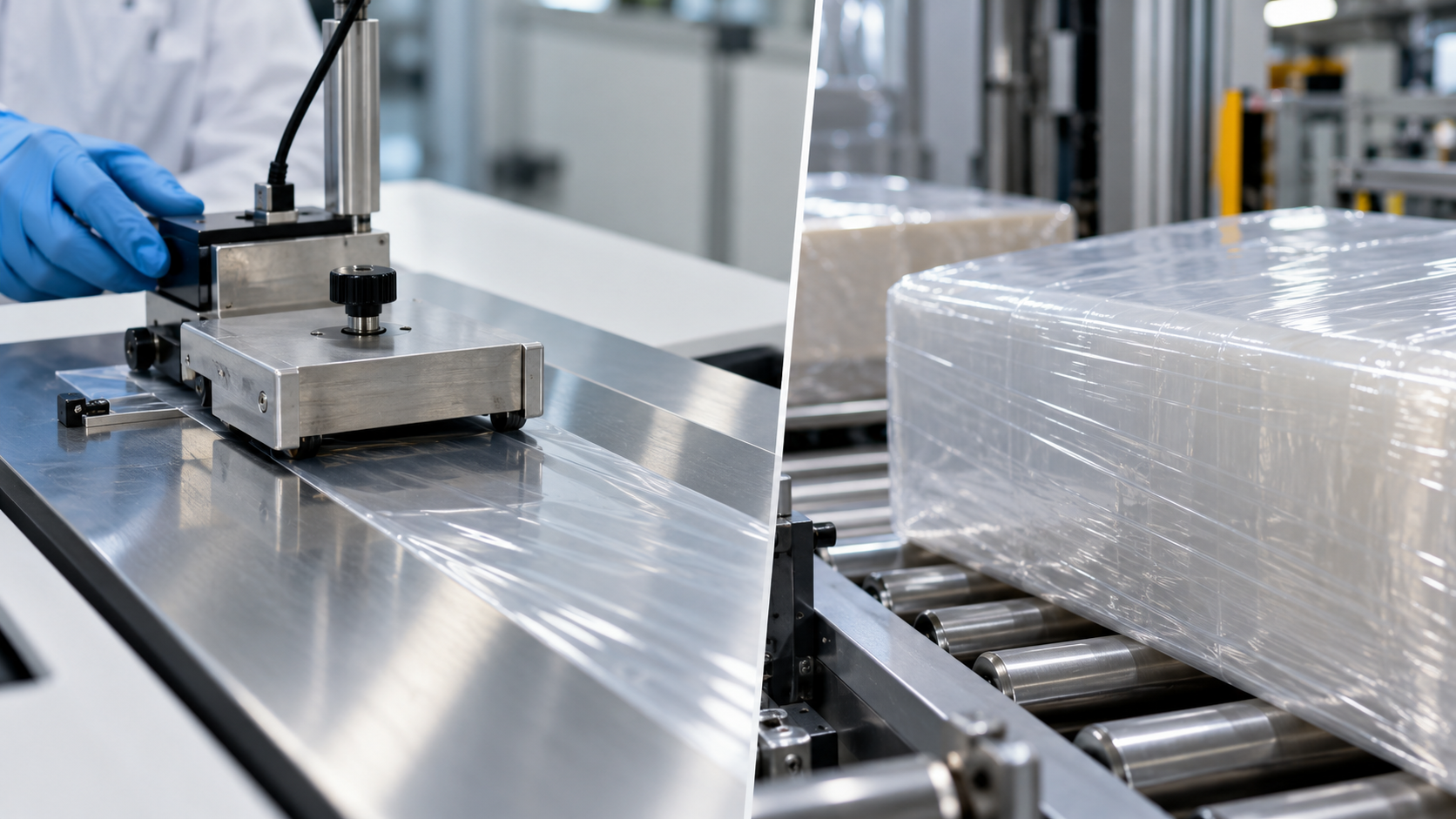
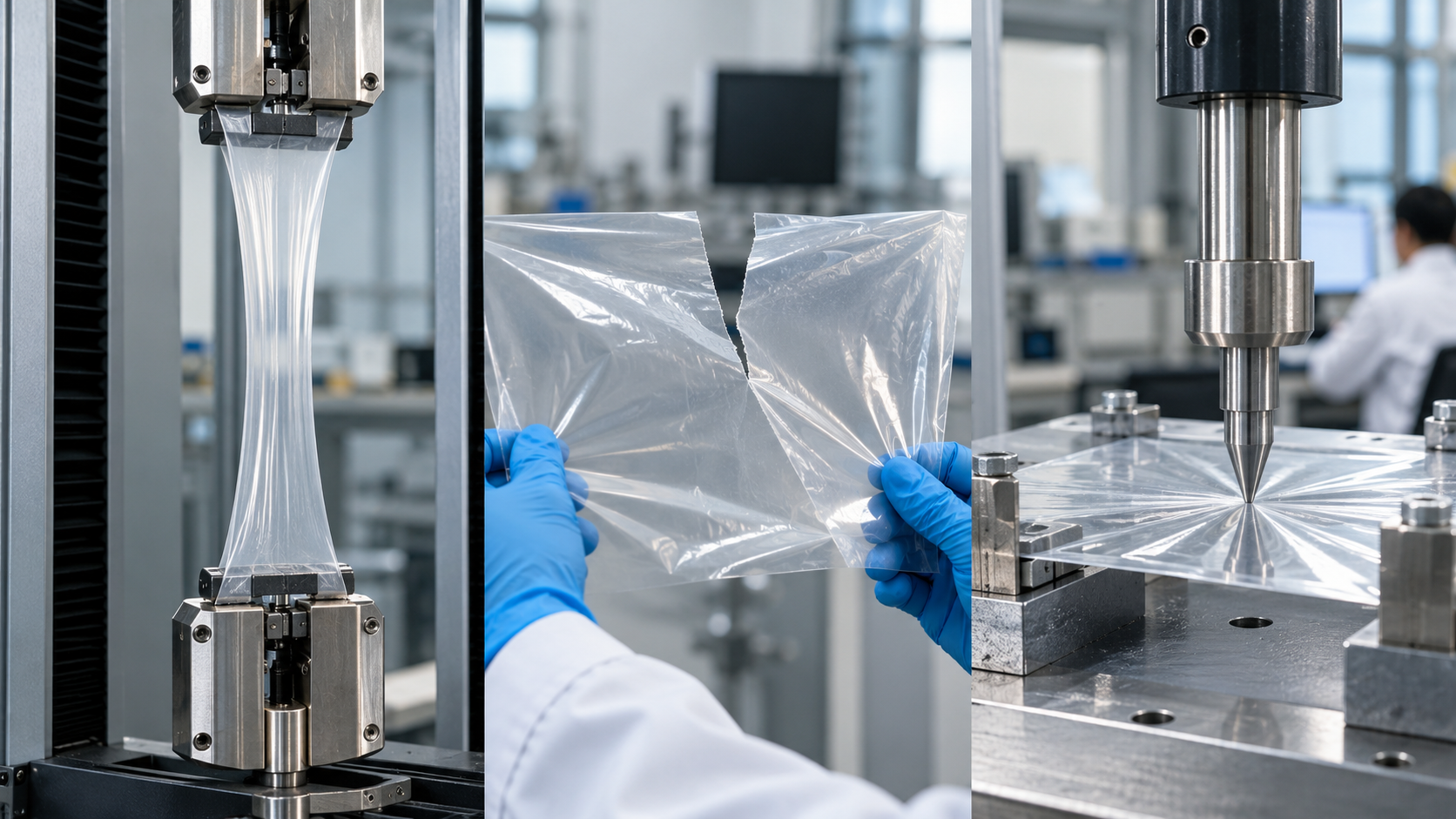
ASTM F88/F88M measures seal strength by separating a strip that contains the seal. The method is used for process validation, process control, and evaluating consistency in flexible packaging seals.
The failure mode is also useful information. A sample may peel at the interface, delaminate, or break in the film next to the seal. Each pattern suggests a different mechanism.
Seal Leak Troubleshooting Checklist
- Does the actual temperature match the machine setting?
- Is sealing pressure uniform?
- Is dwell time sufficient?
- Is there contamination in the seal area?
- Is the film wrinkled?
- Is film gauge consistent?
- Is the sealing bar clean and even?
- Has the material or formulation changed?
Related Reading
- Puncture Resistance vs Tear Strength vs Tensile Strength: What Is the Difference?
- HDPE vs LDPE vs LLDPE: Choosing the Right PE for Industrial Packaging
- Product Specification
Conclusion
PE bag seal leakage can result from a combination of temperature, pressure, dwell time, contamination, wrinkles, resin formulation, and sealing-equipment condition.
The best response is therefore not always to add more microns or increase heat. QA teams should identify the failure mode and evaluate the sealing process systematically.
For background on material behavior, see Dynaplast's comparison of HDPE, LDPE, and LLDPE. PT Dynaplast Mandiri can also evaluate film thickness, formulation, and bag construction against a customer's packing process.