Terjemahan

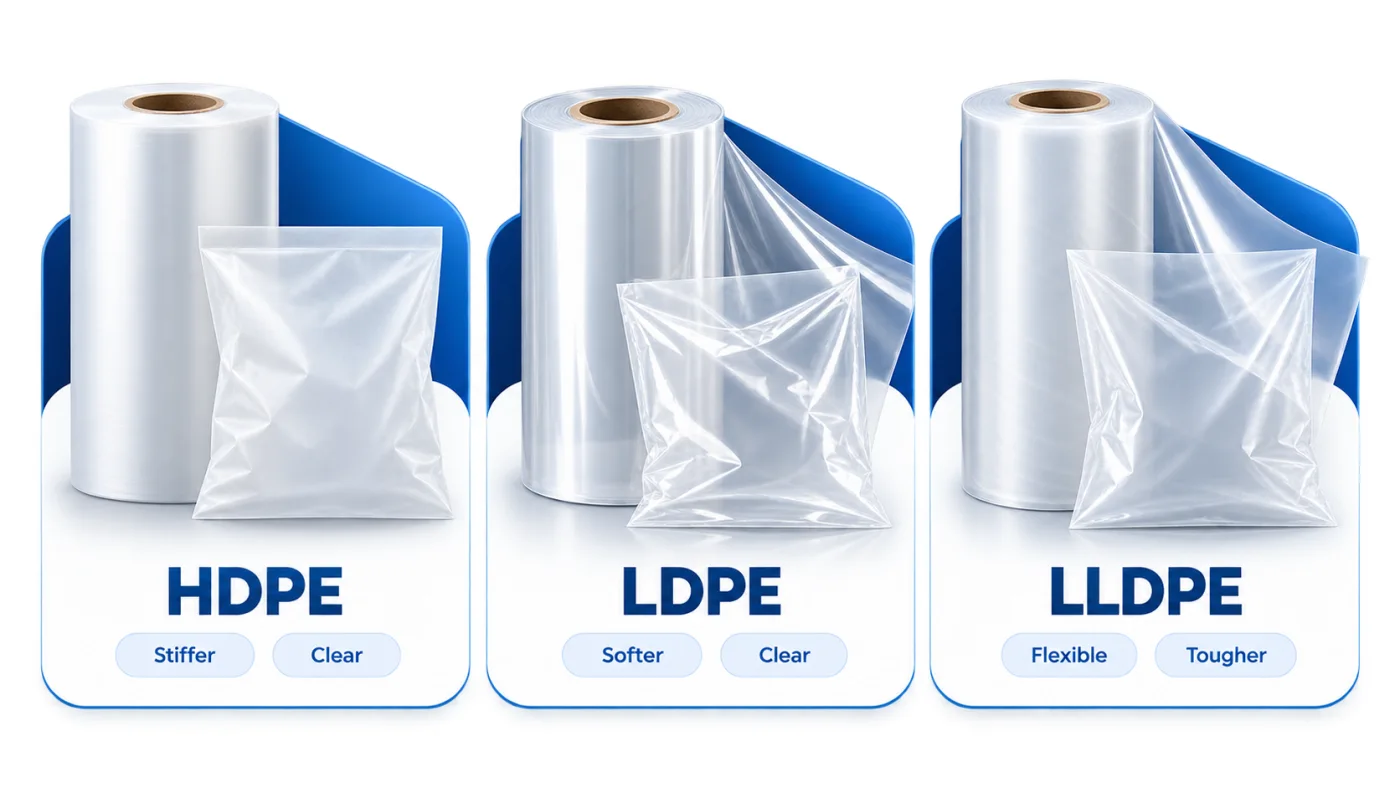
Virgin PE versus recycled PE is a practical sourcing choice for industrial packaging. Virgin resin is newly manufactured polymer, while recycled resin may come from post-industrial scrap (PIR) or post-consumer material (PCR). Both can serve appropriate applications. However, consistency, appearance and traceability often differ, and these factors matter at least as much as headline resin price.
Consistency and Film Appearance
Virgin PE within a controlled grade generally offers tighter raw-material consistency. Recycled PE may vary in colour, melt flow, odour or contamination depending on sorting and reprocessing quality. Variability can show up as gels, specks or changes in film feel. A reliable recycling supplier and batch-level quality checks are important when repeatable performance is required.
Processing and Mechanical Properties
Recycled PE is not automatically weak, but its material history and thermal exposure may alter properties. Evaluate tensile performance, elongation, puncture resistance, seal quality and gauge stability. When blending recycled content into virgin film, establish the percentage through trials and application testing. Copying a recipe from a different bag type may create avoidable failures.
Food Contact and Sensitive Applications
Do not assume every recycled PE grade is suitable for direct food contact, pharmaceuticals or sensitive electronic components. Food-contact suitability depends on material source, recycling controls, applicable regulation and supporting assessment or testing. A generic supplier declaration does not prove that every finished bag is appropriate for every food and contact condition. Tell the converter the exact end use.
Consider the Total Cost
A lower recycled-resin price may be offset by lower yield, extra scrap, process interruptions or customer complaints. Some non-food covers and liners may be good candidates for recycled content. Applications requiring high cleanliness, transparency or very consistent properties may favour virgin resin or a carefully validated blend. Compare delivered acceptable units rather than raw resin alone.
Practical Purchasing Checklist
Before approving a sample or quotation, document the following parameters and check them against a real sample:
- Identify whether recycled content is PIR or PCR and request batch traceability.
- Define acceptable colour, odour, specks and contamination.
- Compare film testing at the same gauge and package format.
- Separate non-food uses from food-contact or other sensitive applications.
- Include defects, yield and quality costs in the purchasing calculation.
Specify recycled-content percentage and the evidence used to support it. Sustainability claims without substantiation do not replace quality assurance. Material recovery is valuable only when the finished packaging still meets its functional requirements.
Frequently Asked Questions
Is recycled PE always cheaper?
Not necessarily on a total-cost basis; conversion yield and defect rates can change.
Is virgin PE always stronger?
No. Grade, formulation and process conditions determine actual results.
Can PCR be used for food packaging?
Only when the specific material, process and intended use meet applicable food-contact requirements and are supported by appropriate evidence.
What Buyers Should Take Away
Select virgin and recycled PE according to function, required consistency, contamination risk and real economics. A measured trial and a clearly described end use are more reliable than a simple resin-price comparison.
Explore Dynaplast’s industrial PE film and bags overview and product specifications for related material and format information.
Need PE film or bags to your specification? Contact Dynaplast Mandiri to discuss material, dimensions, thickness, and order volume.