Terjemahan

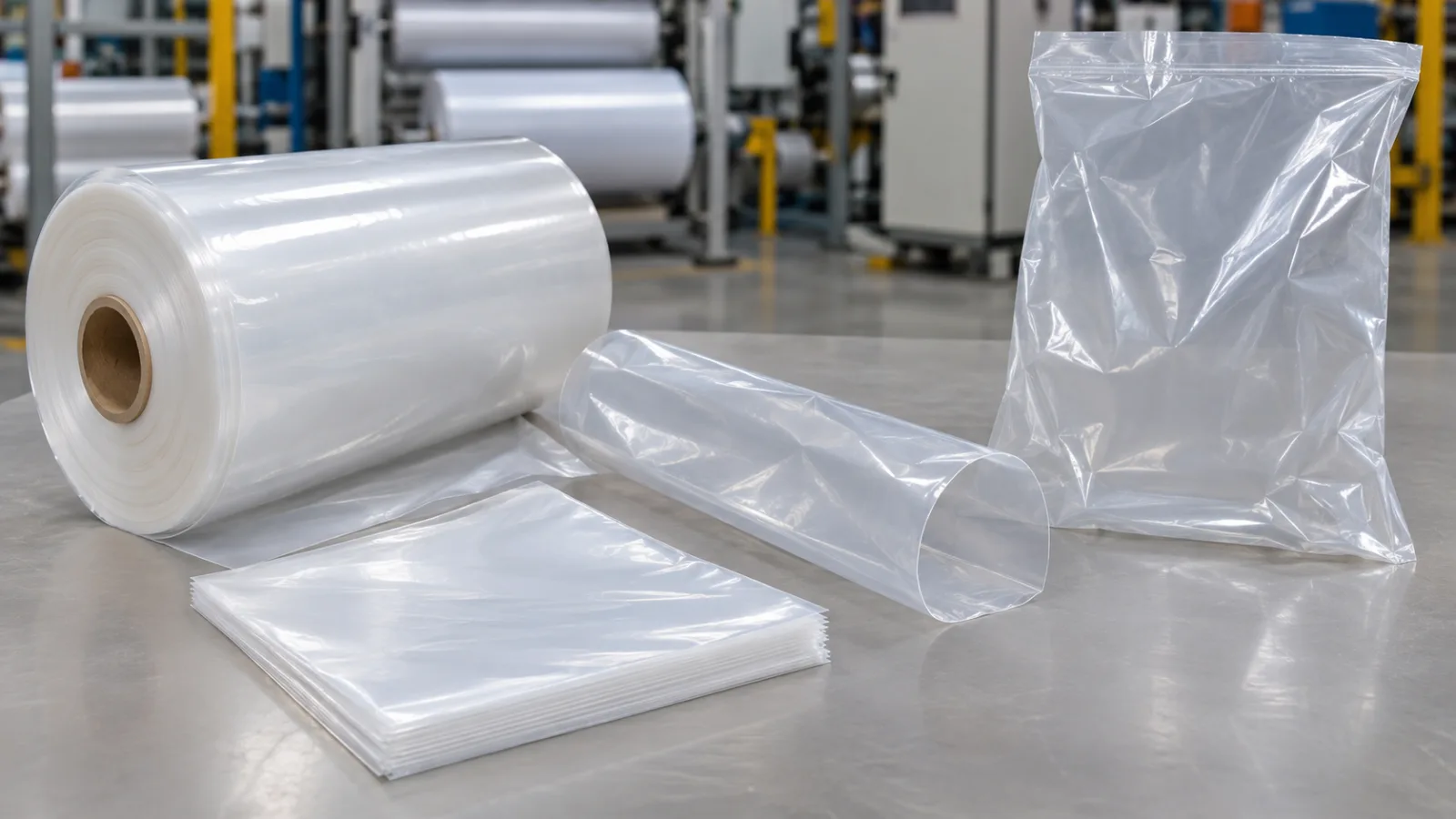
PE film rolls, sheets, tubing and finished bags can be made from similar polyethylene resins, but the supply format changes what the operator must do next. An unsuitable format can create extra cutting, duplicate sealing, scrap or slower packing. Buyers should therefore define the required format before negotiating gauge, dimensions and quantity.
Roll Film for Continuous Processing
PE film rolls are wound on cores and supplied in a specified width, length and gauge. They work well where the customer has its own converting, cutting or wrapping equipment. The continuous feed is useful, but roll weight, outside diameter, winding direction and core inside diameter must match the receiving machine.
Flat Sheets for Covers and Liners
Sheets are pre-cut pieces of film. They can serve as pallet covers, separators or manually placed protective layers where an enclosed bag is unnecessary. Buyers should compare costs by kilogram, sheet or pack as appropriate. Confirm length tolerance and stacking method so operators can separate and use the sheets efficiently.
Tubing Is Not a Finished Bag
Tubular film forms a continuous sleeve with two folded sides, open at both ends until converted. The customer may cut it and add seals. A finished bag already has a defined seal structure, such as a bottom or side seal, leaving an opening for filling. Written descriptions must make the difference explicit to avoid costly production mistakes.
Optimize the Whole Packing Process
A customer manually converting thousands of bags from roll stock may spend more on labour and inconsistent sealing than it saves on material. A plant with an automatic converting line might prefer tubing or roll film. Compare cutting time, seal steps, storage requirements, product damage, scrap and handling before selecting a format.
Practical Purchasing Checklist
Before approving a sample or quotation, document the following parameters and check them against a real sample:
- State clearly whether the order is for roll, sheet, tubing or finished bags.
- Specify open ends, seal location, gusset structure and bag dimensions.
- For roll film, confirm core size, roll weight, web width and diameter limits.
- For sheets and bags, specify pieces per pack, packing method and quantity tolerance.
- Approve a physical sample or dimensioned drawing before production.
In purchasing discussions, 'tube' is sometimes mistaken for a sealed bag. Open-ended tubular film cannot be handled exactly like a finished bottom-sealed bag. Clear purchase-order terminology is a simple but powerful preventive QC measure.
Frequently Asked Questions
Does tubing have a bottom seal?
Normally no. Tubular film remains open at both ends until a converting step adds a seal.
How does a sheet differ from a bag?
A sheet is a flat piece of film, while a bag has a structure that creates a contained volume.
Which format is cheapest?
It depends on the total cost per ready-to-use unit, including waste and downstream conversion.
What Buyers Should Take Away
Choose a film format based on the actual packing workflow. Rolls and tubing enable downstream conversion; sheets suit flat protection; and finished bags reduce preparation where operators need a ready-to-fill package.
Explore Dynaplast’s industrial PE film and bags overview and product specifications for related material and format information.
Need PE film or bags to your specification? Contact Dynaplast Mandiri to discuss material, dimensions, thickness, and order volume.