Terjemahan

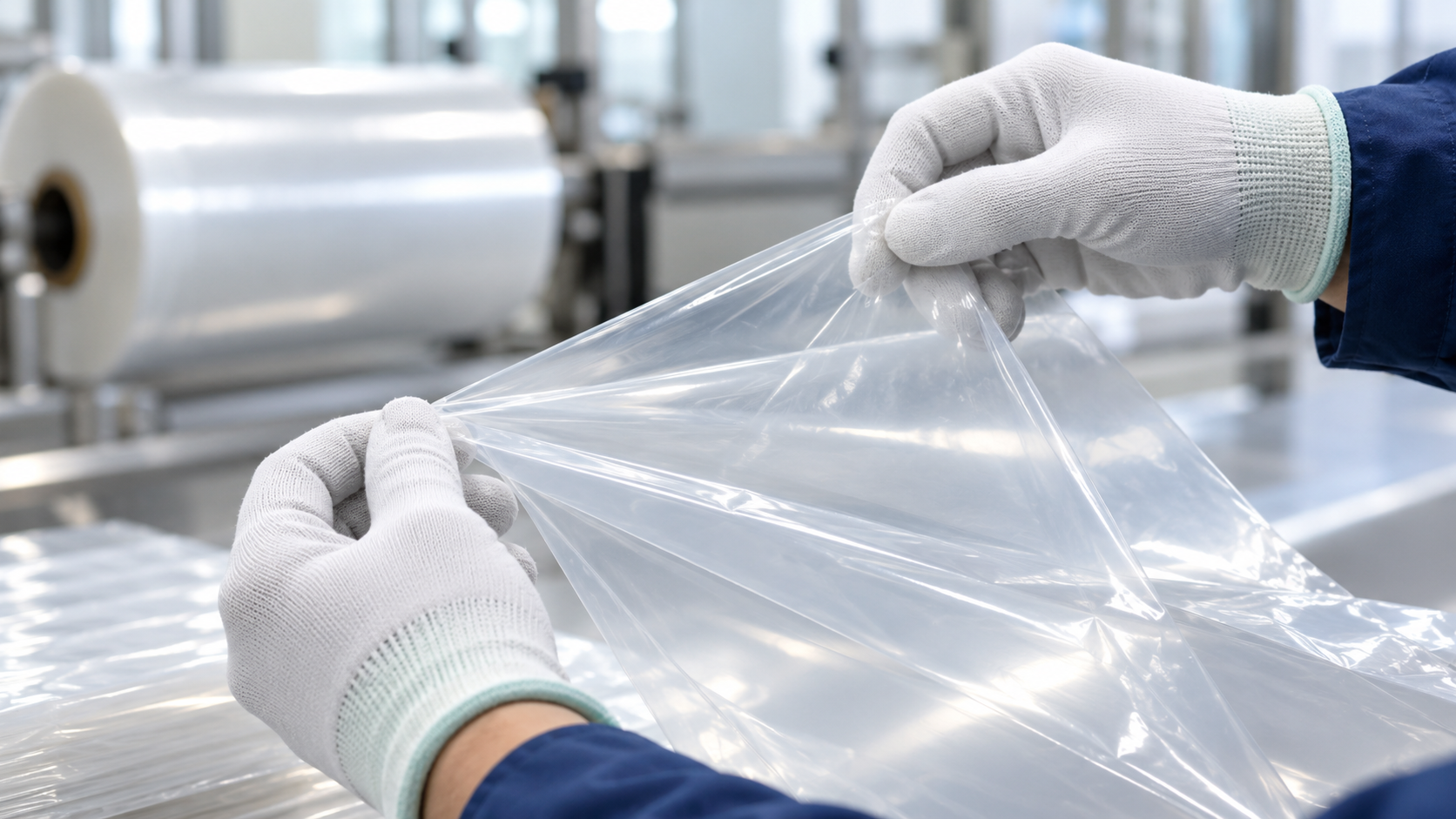
Packaging buyers sometimes experience printing that scratches off PE film, uneven ink wetting, or adhesives that do not bond reliably. The problem is not always the ink itself. One important cause can be insufficient surface energy on the polyethylene film.
Polyethylene naturally has a relatively low-energy surface that can be difficult for many inks, coatings, and adhesives to wet. The packaging industry commonly uses corona treatment to modify that surface before printing or bonding.
What Are Surface Energy and Dyne Level?
For ink to adhere properly, it must first wet the film rather than pull back into beads or uneven areas.
In flexible packaging, surface condition is often discussed using dyne level or wetting tension. A sufficiently treated surface allows the ink or adhesive to spread more effectively.
Dyne level, however, is not a complete measurement of final adhesion. ASTM D5946 explains that electrical-discharge treatment improves wetting behavior, but surface-treatment measurements alone do not fully prove that a particular ink, coating, or adhesive will remain bonded.
What Is Corona Treatment?
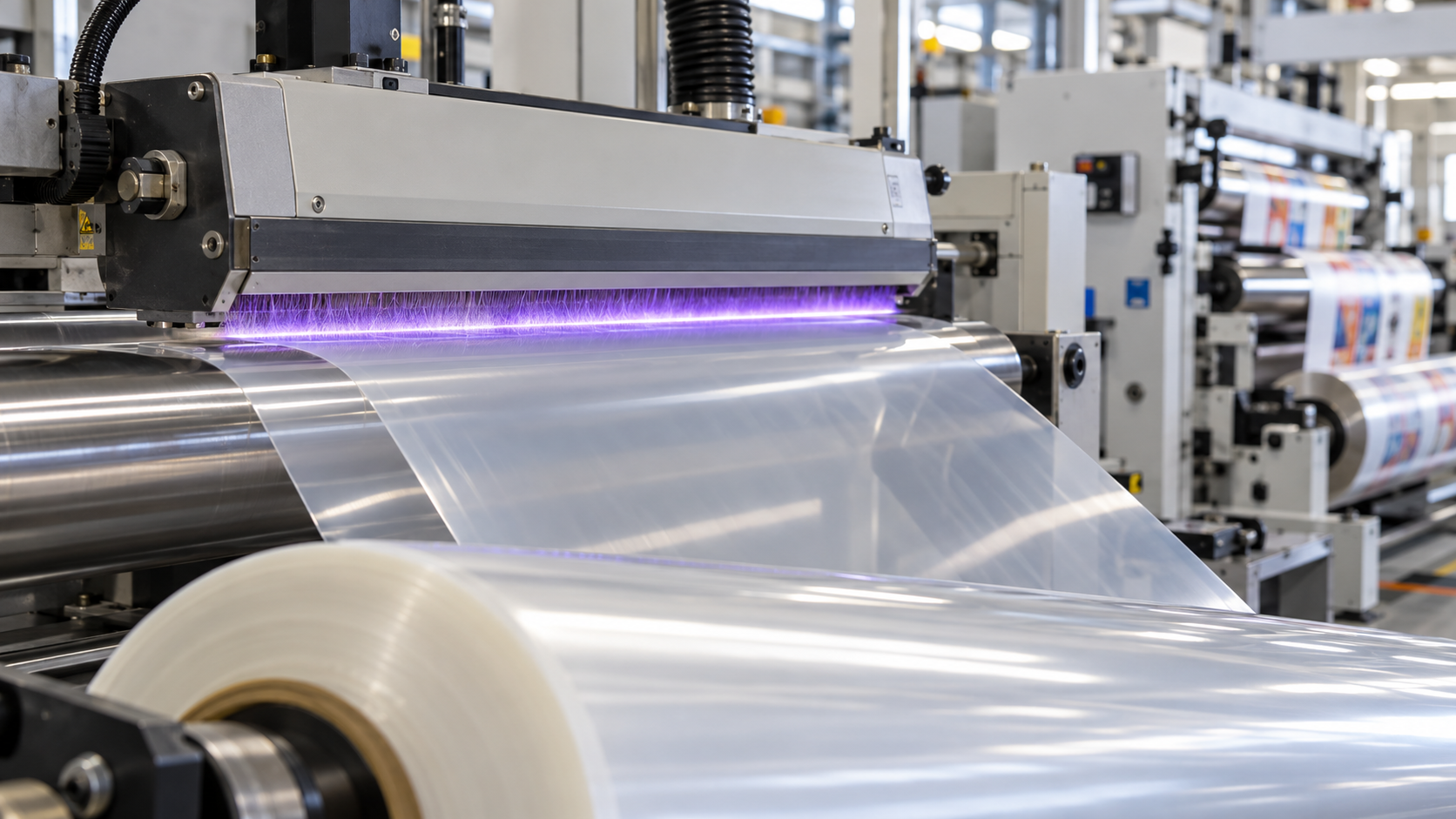
Corona treatment exposes the polymer surface to a controlled high-energy electrical discharge.
The treatment changes the chemistry of the outermost film surface and introduces more polar functionality, increasing its ability to interact with inks, coatings, and adhesives.
The bulk film does not need to look physically different. The useful change occurs primarily at the surface.
Why Does PE Need Treatment Before Printing?
Untreated PE has relatively low surface energy. If the liquid ink cannot adequately wet that surface, print quality and adhesion become unstable.
Common symptoms include:
- Ink pulling together instead of spreading evenly
- Printing that scratches or rubs off easily
- Poor adhesion in tape testing
- Coating or adhesive delamination
- Print that looks acceptable initially but fails after handling
Corona treatment increases the wetting margin and gives the printing process a more suitable surface.
What Dyne Level Is Required?
There is no single universal number for all PE printing applications.
The required treatment depends on:
- Water-based, solvent-based, or UV ink
- Printing method
- Adhesive or coating chemistry
- Film resin and additive package
- Line speed
- Time between film production and printing
Surface-treatment equipment manufacturers such as Enercon publish general starting ranges for PE printing with different ink systems. These are useful process guidelines rather than universal acceptance specifications.
The final requirement should be agreed with the printer or converter using the actual ink and process.
Why Can Dyne Level Decline During Storage?
Corona treatment is not always permanent.
Polymer surfaces can undergo treatment decay over time. Slip additives, surface contamination, storage temperature, resin formulation, and aging can change the condition of the treated surface.
A film that tests well directly after extrusion may therefore behave differently several weeks later.
If the film will be printed after extended storage, expected lead time should be considered when establishing the corona-treatment requirement.
Corona Treatment and Slip Additives Can Interact
Some slip additives work by migrating toward the film surface after extrusion.
This surface layer can influence wetting and adhesion. A film that needs both low COF and reliable printing therefore requires a balance between slip performance and surface treatment.
This is one reason why simply specifying “corona treated” may not be enough for a demanding application.
How Is Surface Treatment Checked?
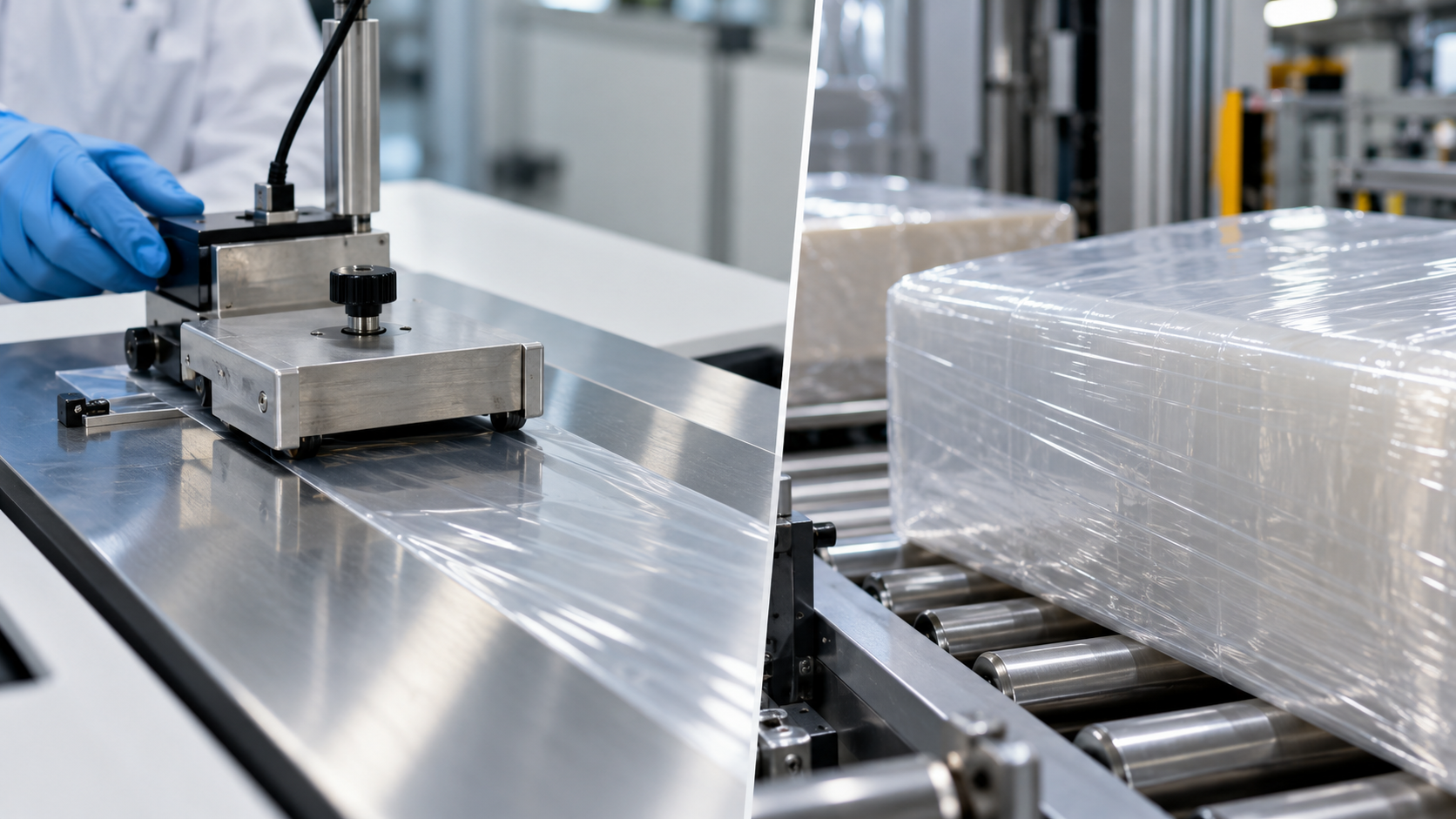
Industry uses tools such as dyne solutions or dyne pens for quick checks, while other methods evaluate water contact angle.
ASTM D5946 uses water contact-angle measurement for corona-treated polymer films and notes that surface treatment can vary from point to point. Multiple measurements are therefore useful when treatment uniformity matters.
What Should a Buyer Include in an RFQ?
For film that will be printed, coated, or laminated, communicate:
- Which side of the film requires treatment
- Printing or lamination process
- Ink or adhesive system if known
- Target dyne level if specified by the converter
- Expected storage time before printing
- Slip or anti-block requirements
Related Reading
- What Are Slip and COF in PE Film? Why Film Can Be Too Slippery or Too Grippy
- What Is Anti-Block in PE Film? Why Plastic Bags Can Stick Together
- Product Specification
Conclusion
Poor print adhesion on PE film is often related to surface energy and wettability. Corona treatment improves the film's ability to accept inks, coatings, and adhesives, but the required treatment level depends on the actual downstream process.
Surface treatment can also decay with time and interact with film additives. Buyers should therefore communicate downstream printing requirements when the film is specified.
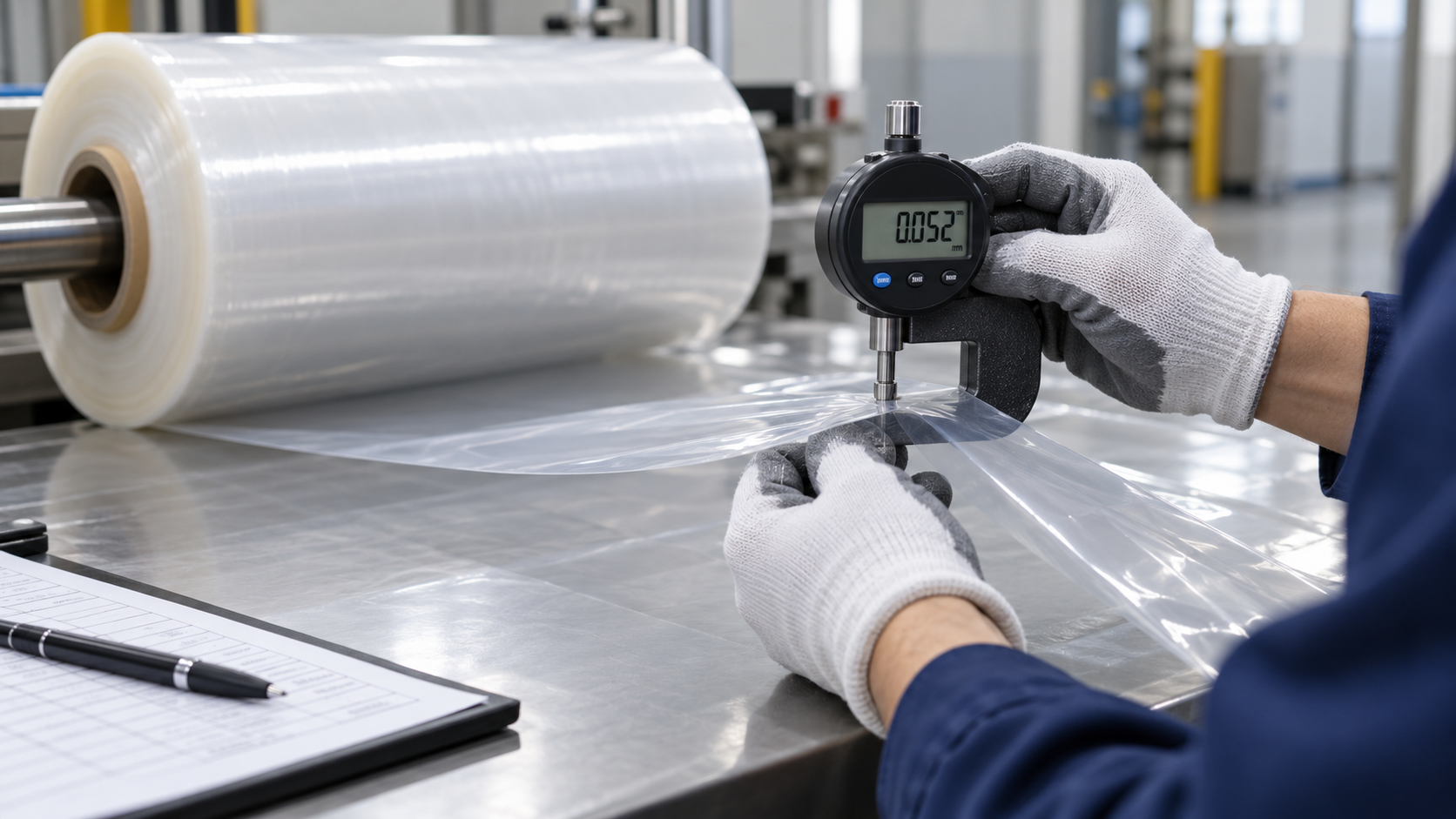
PT Dynaplast Mandiri can supply corona-treated PE film for selected industrial applications. Polymer, thickness, slip, treatment level, and printing conditions should be evaluated together so the film matches the converter's process.