Terjemahan
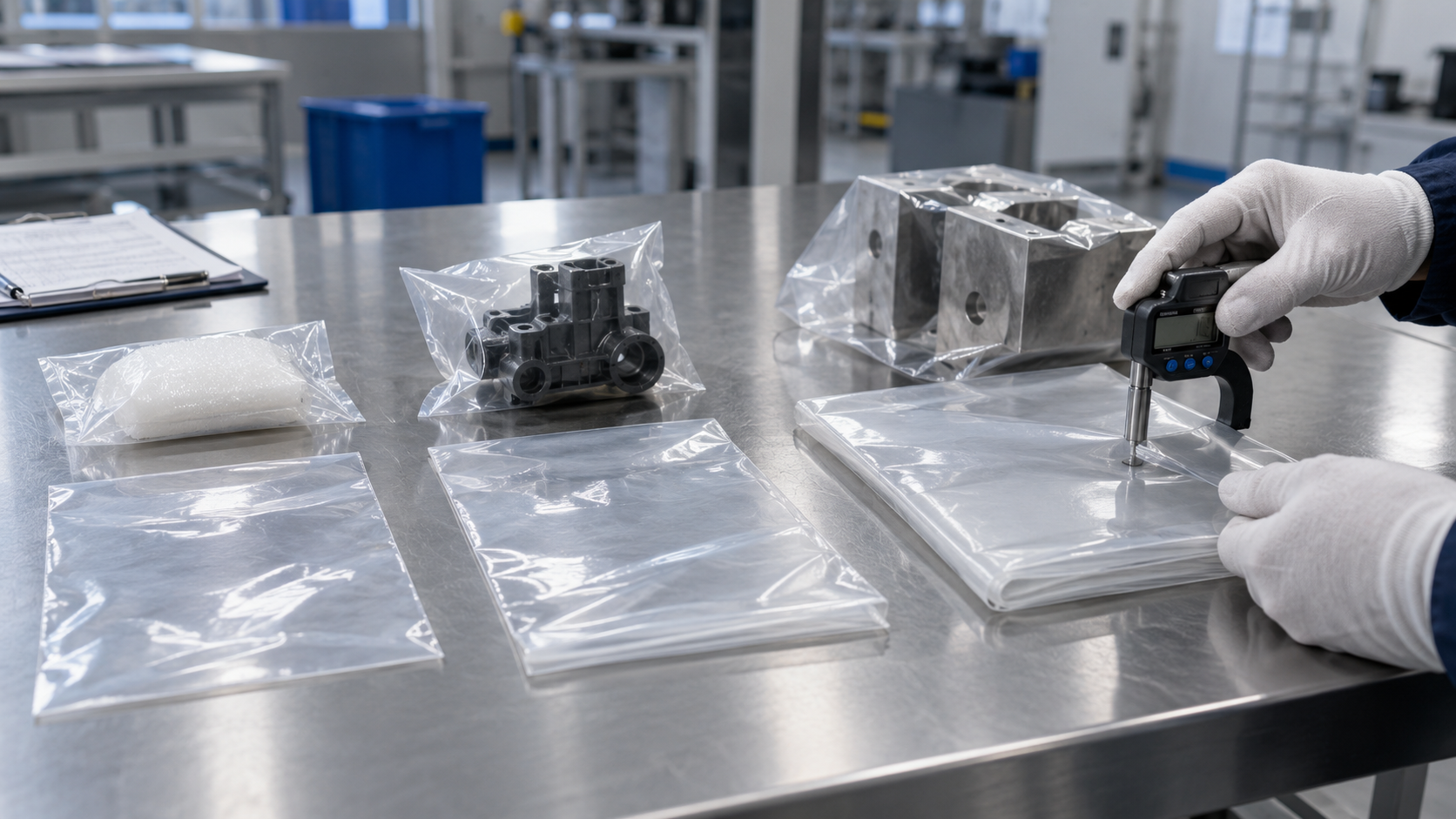
There is no single film thickness that is suitable for every product. The table below can be used as a starting point when developing an initial specification before sample testing.
HDPE
HDPE can be produced at significantly lower gauges than LLDPE because the film is relatively stiff. At PT Dynaplast Mandiri, 10 microns is the minimum thickness that can be produced for HDPE.
| Application | Recommended Starting HDPE Thickness |
|---|---|
| Very light bags / inner packaging | 10–15 µm |
| Textile, garment, or lightweight products | 15–25 µm |
| Light carton liners | 15–25 µm |
| Lightweight component bags | 20–30 µm |
| General industrial packaging | 25–40 µm |
| Heavier products without sharp edges | 30–50 µm |
| Large light-duty liners / covers | 30–60 µm |
Thin HDPE film is suitable when the main requirement is basic protection from dust, light moisture exposure, or product separation, while load and puncture risk remain relatively low.
Very thin HDPE is generally not ideal for products with sharp edges because a puncture can develop into a larger tear.
LDPE
LDPE is softer and more flexible than HDPE and is commonly used where greater flexibility and clearer film appearance are preferred.
| Application | Recommended Starting LDPE Thickness |
|---|---|
| Lightweight products / textile packaging | 30–40 µm |
| General-purpose packaging | 40–60 µm |
| Medium industrial components | 50–75 µm |
| Carton / box liners | 50–100 µm |
| Heavy products | 75–120 µm |
| Large covers / heavy-duty liners | 100–150+ µm |
These ranges are intended as an initial guide. Products with sharp corners or demanding handling conditions may require a thicker or more robust film structure.
LLDPE
For LLDPE, PT Dynaplast Mandiri uses 40 microns as the safer minimum starting point for most industrial applications, although technical capability and individual formulations may vary.
| Application | Recommended Starting LLDPE Thickness |
|---|---|
| Lightweight products / general packaging | 40–50 µm |
| Textile or flexible products | 40–60 µm |
| Medium industrial components | 50–75 µm |
| Carton / box liners | 50–80 µm |
| Spare parts and automotive components | 60–100 µm |
| Heavy products | 75–120 µm |
| Products with relatively sharp edges | 80–120 µm |
| Heavy-duty industrial bags | 100–150 µm |
| Pallet covers / large equipment covers | 100–200+ µm |
LLDPE is often considered for products with higher puncture or tear risk because it can provide a good combination of flexibility and toughness.
However, increasing thickness is not always the first or only solution. If puncture is the main problem, resin selection, metallocene-based formulations, bag design, and sealing conditions can also have a significant effect on performance.
Quick Reference for Buyers
As a practical starting point:
10–20 µm HDPE
→ very light-duty packaging
20–40 µm HDPE
→ light to general industrial packaging
30–60 µm LDPE
→ light to general flexible packaging
40–60 µm LLDPE
→ general industrial packaging
60–100 µm LLDPE
→ components, automotive parts, and heavier products
80–120 µm LLDPE
→ heavier products or applications with greater puncture risk
100–150+ µm PE
→ heavy-duty liners, covers, and large or demanding industrial applications
These ranges are not universal standards. Wider or longer packaging, sharp-edged products, heavy loads, frequent handling, or long-distance transportation may require a thicker film.
For new applications, the safest approach is to establish an initial specification based on the intended use and then perform a sample trial using the actual product before full-scale production.