Terjemahan
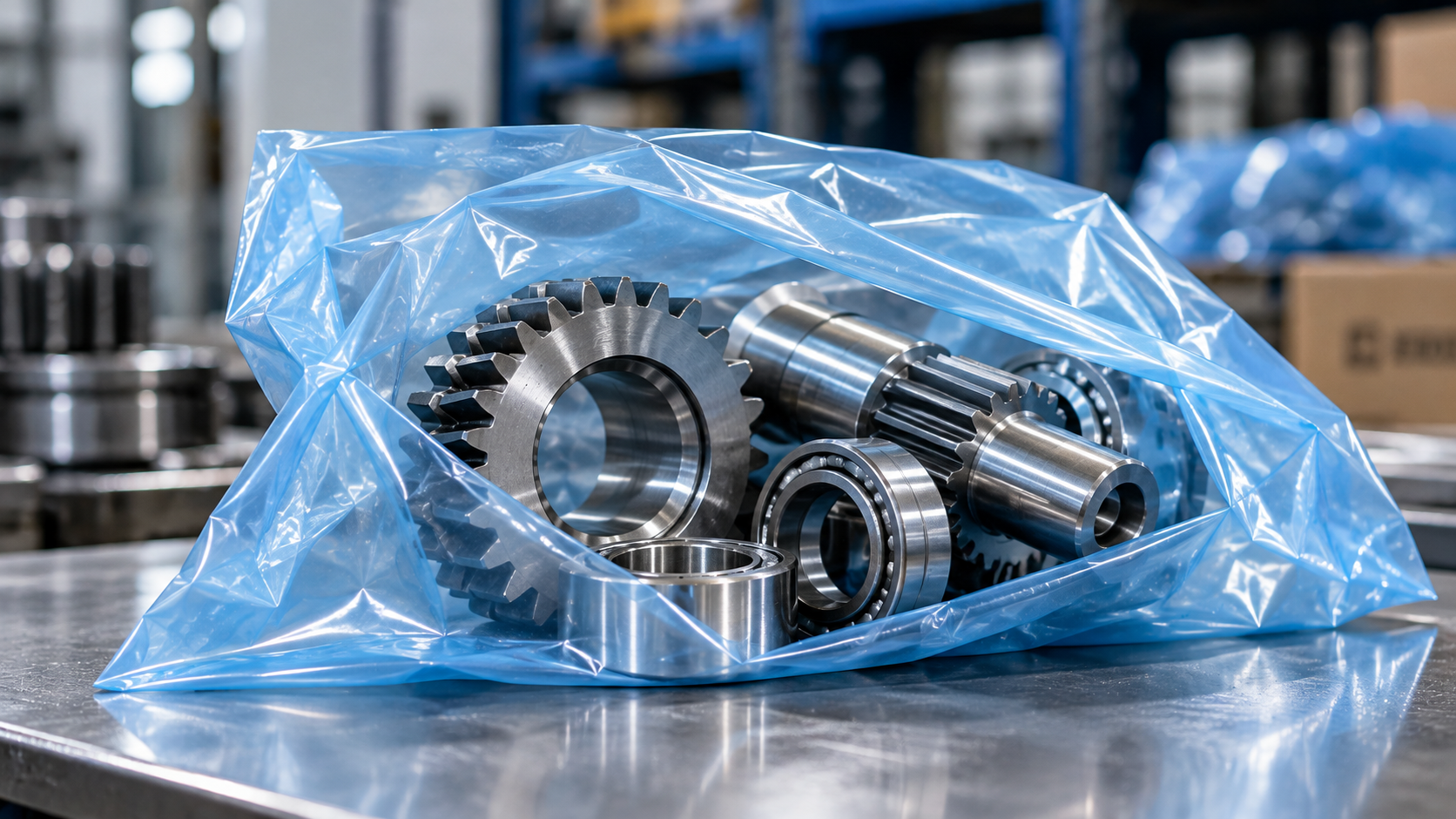
Corrosion can become a significant problem during the storage and transportation of metal components. A part may leave the factory in good condition but later be exposed to humidity, temperature changes, contamination, and long transit periods.
One packaging method used to reduce this risk is VCI plastic, also known as VCI film.
What Is VCI Plastic?
VCI stands for Volatile Corrosion Inhibitor or Vapor Corrosion Inhibitor.
VCI plastic is generally a polyethylene packaging film containing a corrosion-inhibiting formulation. Inside an enclosed package, the film gradually releases inhibitor molecules into the surrounding airspace.
These molecules travel through the enclosure and interact with exposed metal surfaces, forming an extremely thin, invisible protective layer. This layer helps interrupt the electrochemical reactions that lead to corrosion.
Because VCI works through the vapor phase, it can reach metal surfaces that are not in direct physical contact with the film.
How Does VCI Film Work?
The basic process can be understood in four steps:
- The metal component is placed inside VCI packaging.
- The package is closed or sealed to create a relatively enclosed environment.
- VCI molecules are released from the packaging material and distribute throughout the enclosed airspace.
- The molecules adsorb onto metal surfaces and help suppress the corrosion process.
This vapor-phase action means that every surface does not need to be directly wrapped by the film.
However, the enclosure is important. Large openings, damaged packaging, or tears can allow inhibitor vapors to escape and reduce the effectiveness of the corrosion-protection system.
Where Is VCI Plastic Used?
VCI film is primarily used for metal components that may be exposed to corrosion risks during storage, work-in-process, or transportation.
Common applications include:
- Automotive spare parts
- Gears, bearings, shafts, and machine components
- Machined metal parts
- Tools and hardware
- Metal components used in electronics
- Export components exposed to long transit periods
- Spare parts held in inventory
PT Dynaplast Mandiri currently offers PE packaging with VCI anti-corrosion functionality for automotive parts, machinery components, electronics, and other metal products.
Can the Same VCI Film Protect Every Metal?
Not necessarily.
Different VCI formulations may be designed for ferrous metals, non-ferrous metals, or multiple metal types. Steel, aluminium, copper, brass, zinc, and mixed-metal assemblies can have different corrosion-protection requirements.
Industrial buyers should therefore identify the metal or combination of metals being packed when specifying VCI packaging.
For assemblies containing several metals, a VCI system specifically designed and validated for multi-metal protection may be required.
Important Conditions for Effective VCI Packaging
Start With Clean, Dry Parts
VCI does not remove standing water.
Metal components should normally be clean and visibly dry before packaging. Moisture, machining fluid residues, salts, fingerprints, or other contaminants can increase corrosion risk.
Control Condensation
Hot components should generally be allowed to cool before sealing. If warm metal is enclosed and later cools, condensation may form inside the package.
Close the Package Properly
Depending on the packaging design, bags may be heat sealed, tied, or securely closed by another appropriate method. Limiting air exchange allows the VCI atmosphere to develop and remain inside the package.
Film Thickness and VCI Performance Are Different Specifications
PE film thickness primarily affects physical packaging properties such as puncture resistance, tear resistance, and handling durability.
Corrosion protection comes from the VCI system. A thicker film does not automatically provide better corrosion protection if the inhibitor formulation, package design, or application conditions are unsuitable.
VCI Film vs Rust Preventive Oil
One practical advantage of VCI packaging is that metal components can often remain clean and dry rather than being completely covered with rust-preventive oil or grease.
When many VCI packages are opened, the inhibitor molecules gradually dissipate from the surface, allowing parts to be used without an additional degreasing step.
This does not mean VCI is automatically the correct solution for every application. The appropriate corrosion-prevention system depends on the metal, storage period, environment, contamination risk, and packaging conditions.
Conclusion
VCI plastic is polyethylene packaging designed to help protect metals from corrosion by releasing corrosion-inhibiting molecules into an enclosed package.
For effective protection, buyers should consider the metal type, component cleanliness, moisture conditions, sealing integrity, package size, film strength, and transportation environment.
For automotive components, machinery parts, spare parts, and other metal products, PT Dynaplast Mandiri can help evaluate the packaging dimensions, PE film construction, and VCI requirement before the final packaging specification is established.