Terjemahan
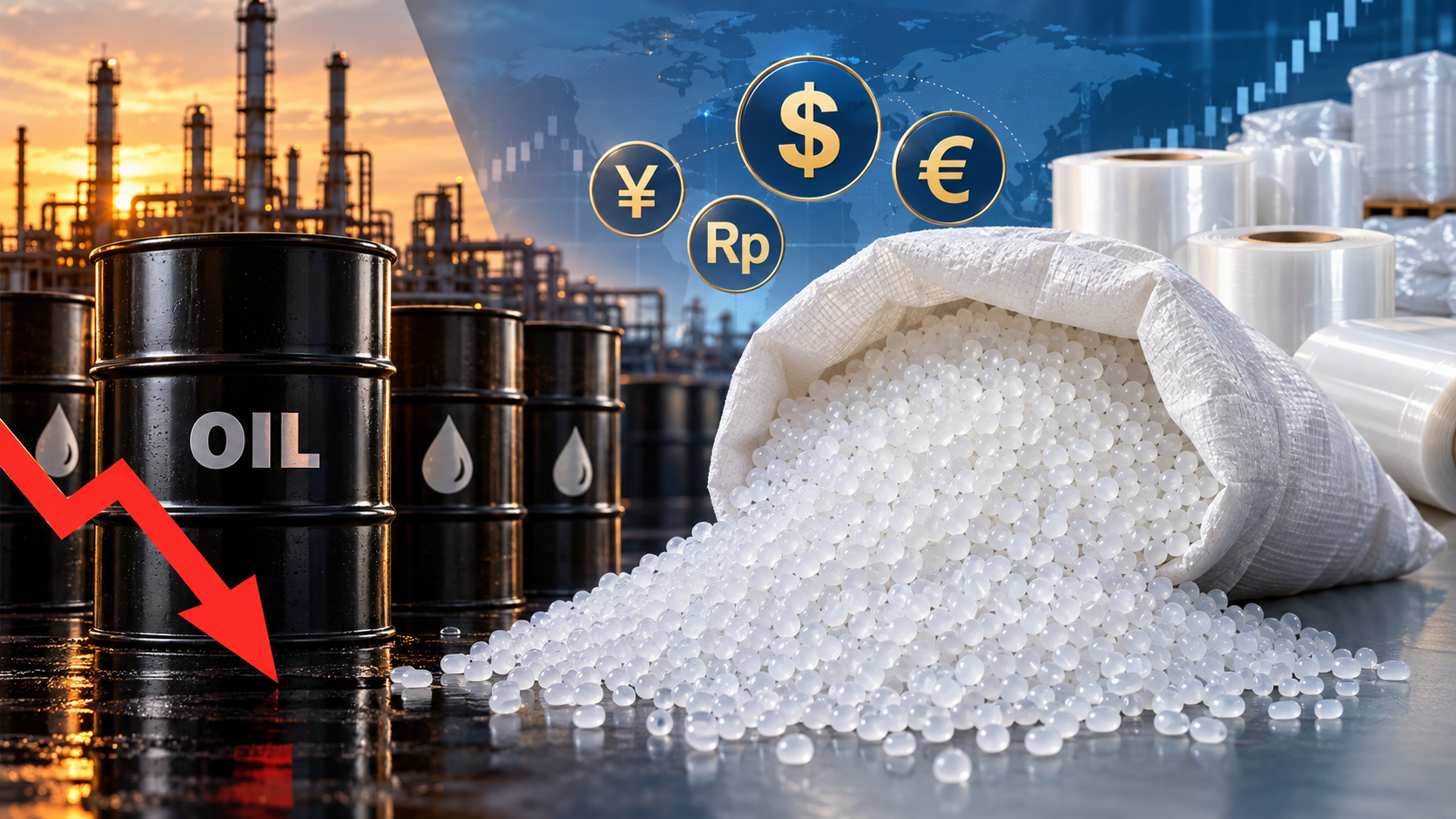
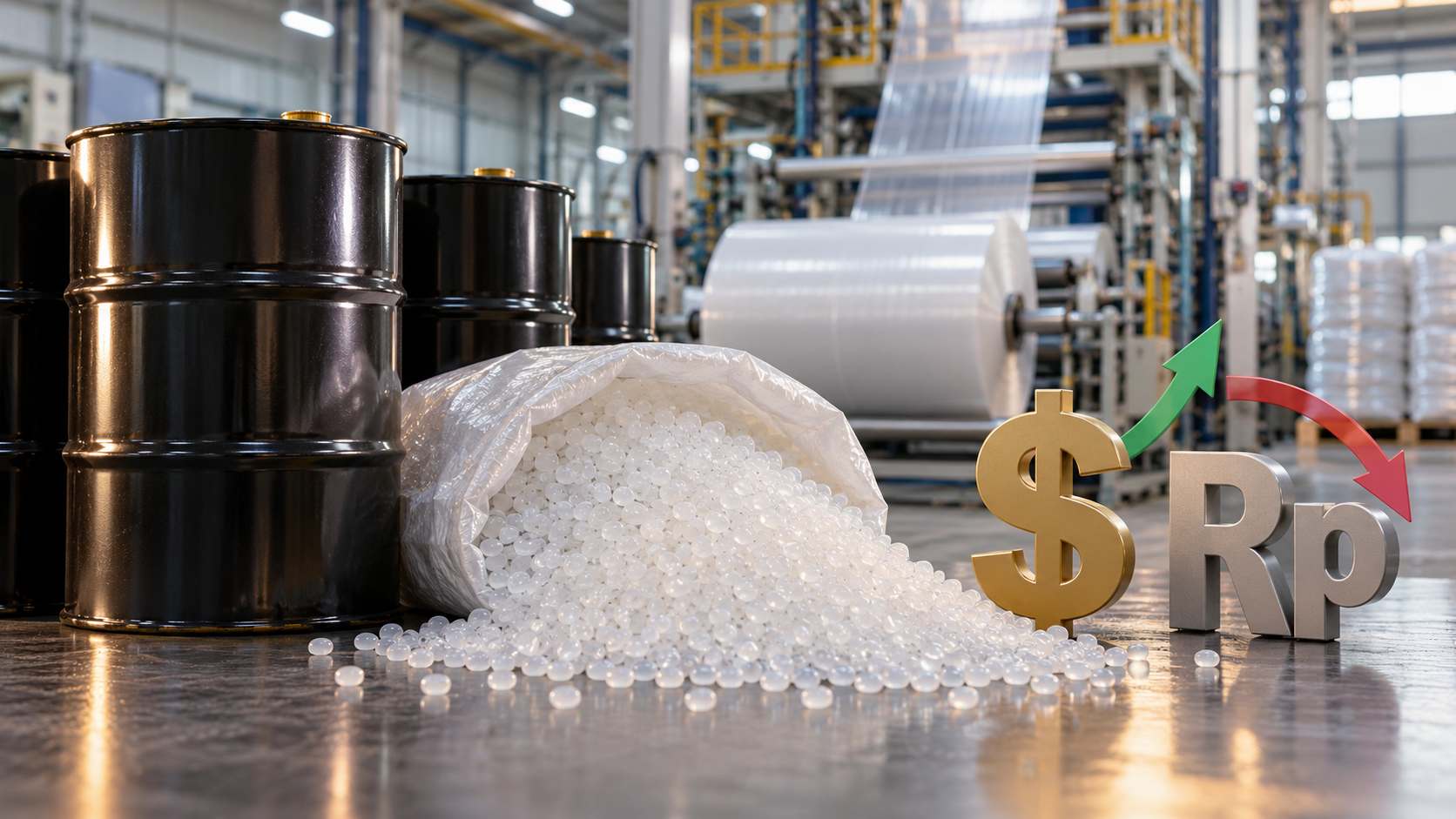
Plastic buyers often use crude oil as an indicator for PE resin prices. The logic appears straightforward: if oil becomes cheaper, petrochemical feedstock costs should decline and polyethylene should follow.
The relationship is real, but it is not direct.
Polyethylene passes through several stages before becoming the HDPE, LDPE, or LLDPE resin purchased by a converter. Feedstock cost is only one part of the final market price. Resin supply, demand, inventory, freight, currency, and production conditions can all keep PE prices firm even after crude oil begins to fall.
Crude Oil Is Only the Beginning of the PE Value Chain
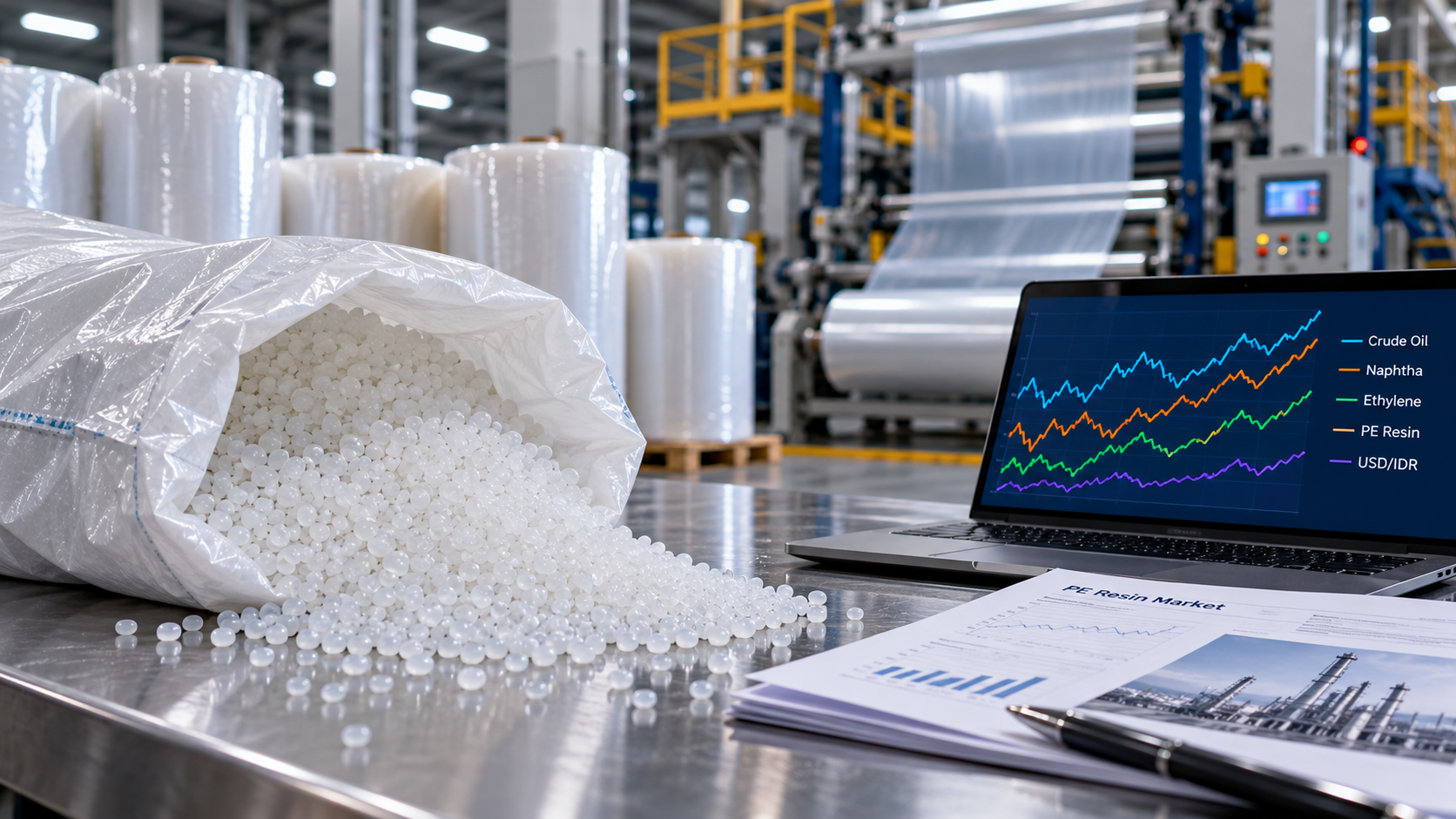
A simplified petrochemical chain commonly used in Asia is:
Crude Oil → Naphtha → Ethylene → Polyethylene
Naphtha is used as a feedstock in steam crackers to produce ethylene. The ethylene is then polymerized to produce polyethylene.
This means crude oil sits several steps upstream from the final PE resin market.
The relationship also differs by region. In the United States, ethane derived from natural gas is an important feedstock for ethylene production. The U.S. Energy Information Administration explains that ethane is cracked into ethylene, which is then commonly polymerized into polyethylene.
As a result, PE produced in different regions can have different feedstock economics.
1. Naphtha and Ethylene May Not Fall as Quickly as Crude
Crude oil may weaken while naphtha remains supported by tight regional availability or continued demand from steam crackers.
Ethylene also has its own supply-demand balance.
If several crackers are undergoing maintenance or operating at reduced rates, ethylene availability may remain tight even after crude oil declines.
For polyethylene production, movements in ethylene and cracker economics can therefore be more relevant than watching oil alone.
2. PE Resin Supply Can Remain Tight
Lower feedstock costs do not immediately create more polyethylene.
If polymer plants are undergoing turnarounds, operating rates have been reduced, or imported cargoes are delayed, the volume of PE available to buyers can remain limited.
Sellers may therefore have little reason to reduce offers quickly if customers are still competing for available material.
Recent Asian petrochemical markets illustrate how operating rates, regional production, inventories, plant restarts, and new capacity can alter supply independently of immediate crude movements.
3. Suppliers May Still Be Holding Higher-Cost Inventory
Domestic resin prices do not necessarily respond to international markets in real time.
A distributor may be holding inventory that was:
- purchased when polymer prices were higher,
- shipped at higher freight costs,
- imported under less favorable currency conditions,
- or financed and stored at a higher total cost.
This older inventory may need to move through the supply chain before the benefit of lower upstream costs becomes fully visible.
This creates a time lag between falling crude and falling local resin prices.
4. Replacement Cost Matters More Than Today’s Oil Price
Suppliers also consider the cost of replacing the resin they sell.
Crude may have fallen, but if the next PE cargo remains expensive because of constrained supply, firm ethylene, high freight, or limited availability, the supplier’s replacement cost may still be high.
For procurement teams, this makes a better question than simply asking why PE has not followed crude:
“Has the replacement cost of the next resin shipment actually fallen?”
5. Supply and Demand Can Override Feedstock Costs
Demand can push PE in either direction.
If converter demand is weak and inventories are high, producers and traders may eventually reduce prices even when their cost base remains relatively firm.
If buyers begin restocking while supply is limited, however, resin prices may remain supported even while crude is correcting.
Current Asian market reporting continues to highlight inventories, operating rates, and post-holiday purchasing activity as important indicators for petrochemicals and PE—not crude oil alone.
6. Freight and Currency Can Offset Cheaper Resin
For imported PE, the landed cost also includes factors such as:
- Ocean freight
- Insurance
- Handling
- Financing
- Inland transportation
- Exchange rates
Therefore, an international resin-price decline may not translate into an equivalent reduction for an Indonesian buyer if freight increases or the rupiah weakens.
HDPE, LDPE and LLDPE May Also Move Differently
Polyethylene is not one single market.
LDPE may remain tight while LLDPE is well supplied. Film grades can behave differently from injection or blow-molding grades.
Procurement teams should therefore monitor the specific polymer, grade, origin, availability, inventory level, and lead time they actually purchase.
Conclusion
Crude oil influences polyethylene costs, but PE prices do not move directly or immediately with oil.
Between crude oil and the buyer are naphtha or other feedstocks, ethylene, polymer production, resin supply-demand, inventory, freight, currency, and replacement cost.
A decline in crude should therefore be treated as one market indicator—not a guarantee of an immediate PE price reduction.
For industrial procurement, the better approach is to monitor the entire supply chain and the availability of the specific resin grades being used. PT Dynaplast Mandiri monitors raw-material market conditions as part of production planning for HDPE, LDPE, and LLDPE industrial films and bags.