Terjemahan
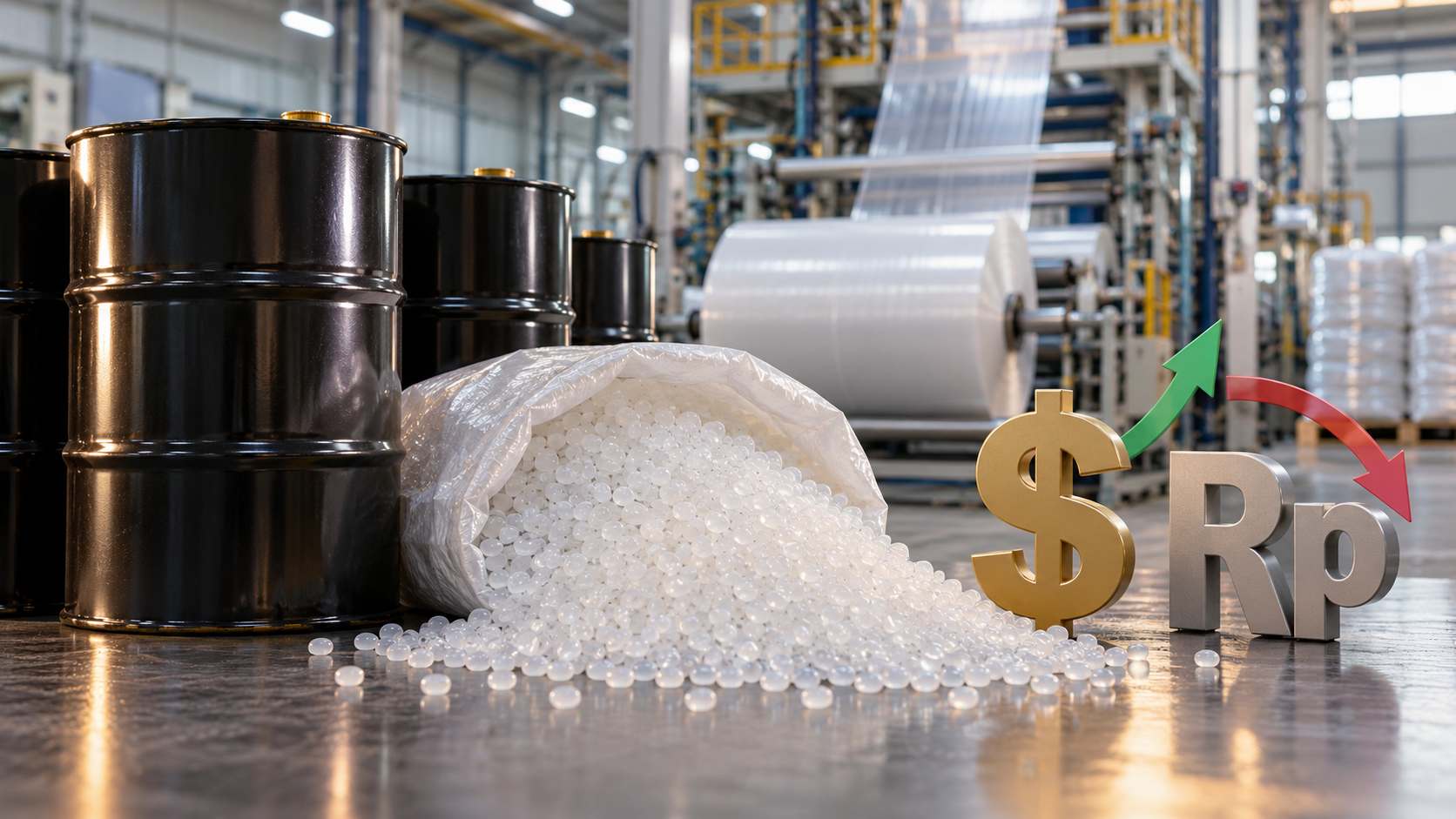
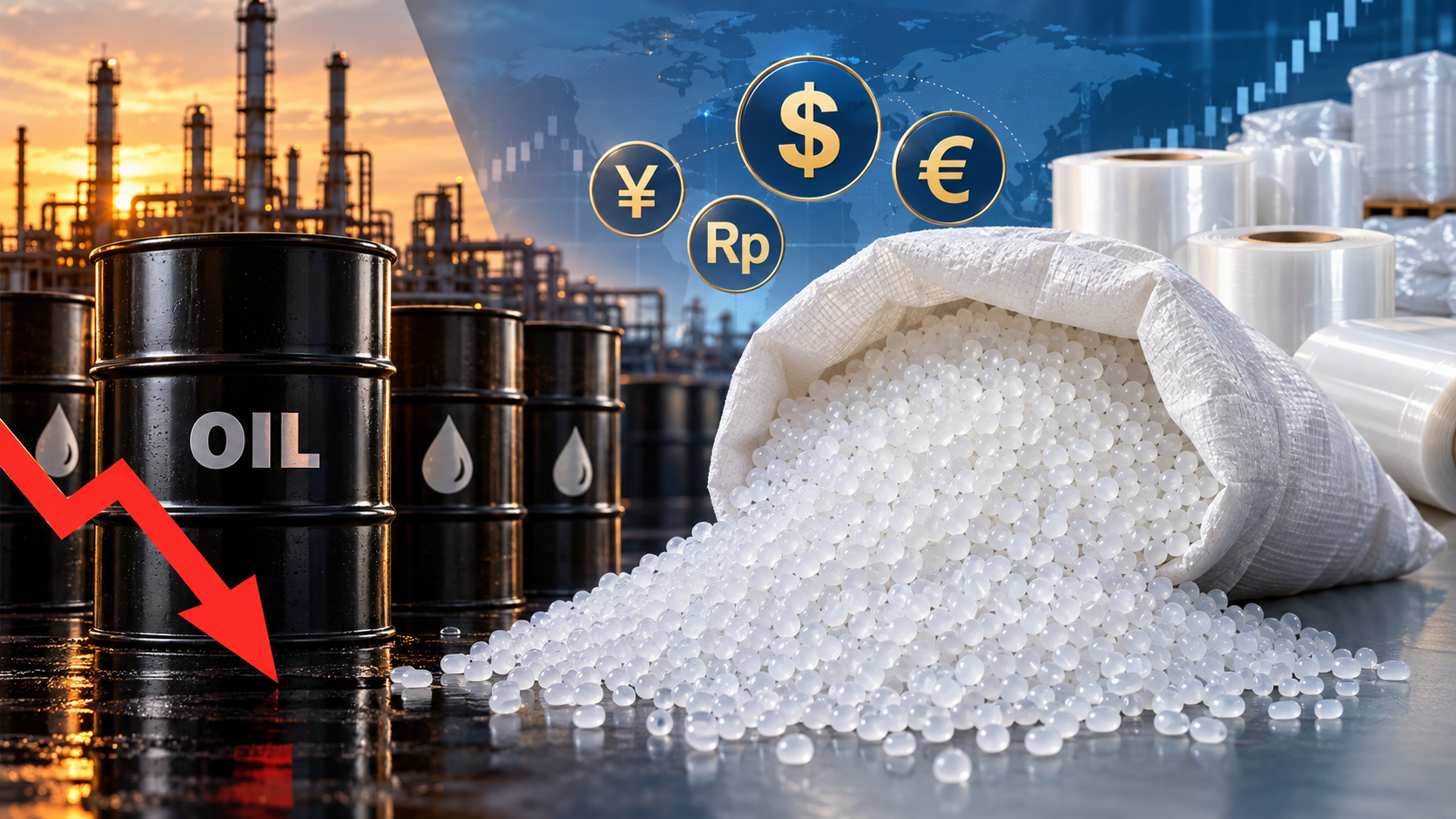
For Indonesian industrial buyers, movements in the USD/IDR exchange rate can significantly affect plastic raw-material costs.
Even when international polyethylene prices remain unchanged, a weaker rupiah means more local currency is required to purchase the same quantity of USD-denominated resin.
However, the relationship between exchange rates and local plastic prices is not always immediate. International PE prices, freight, supplier inventory, and replacement costs all influence how quickly currency movements appear in the domestic market.
Why Does USD/IDR Matter for PE Resin?
International resin trading is commonly denominated in U.S. dollars.
For an Indonesian company purchasing imported PE—or buying from a distributor whose cost base is linked to USD—the basic relationship can be represented as:
Resin price in USD × USD/IDR exchange rate = base resin value in rupiah
The final landed cost may then also include:
- Ocean freight
- Insurance
- Port and handling costs
- Financing
- Domestic transportation
- Warehousing
This means currency movements can affect raw-material costs even before the resin reaches a film or bag production line.
Why Don’t Plastic Prices Change Immediately With FX?
Resin distributors and converters do not necessarily replace inventory every day.
A supplier may still have material purchased earlier under different currency conditions. As a result, today’s exchange-rate movement may not immediately appear in today’s resin quotation.
This is where replacement cost becomes important.
A supplier may be selling older inventory purchased at a previous cost. Once that stock is depleted, the next cargo must be purchased using current resin prices, freight costs, and exchange rates.
Selling prices can therefore begin reflecting the expected cost of replacing inventory rather than only the historical cost of material already in the warehouse.
Exchange Rates Are Only One Part of PE Pricing
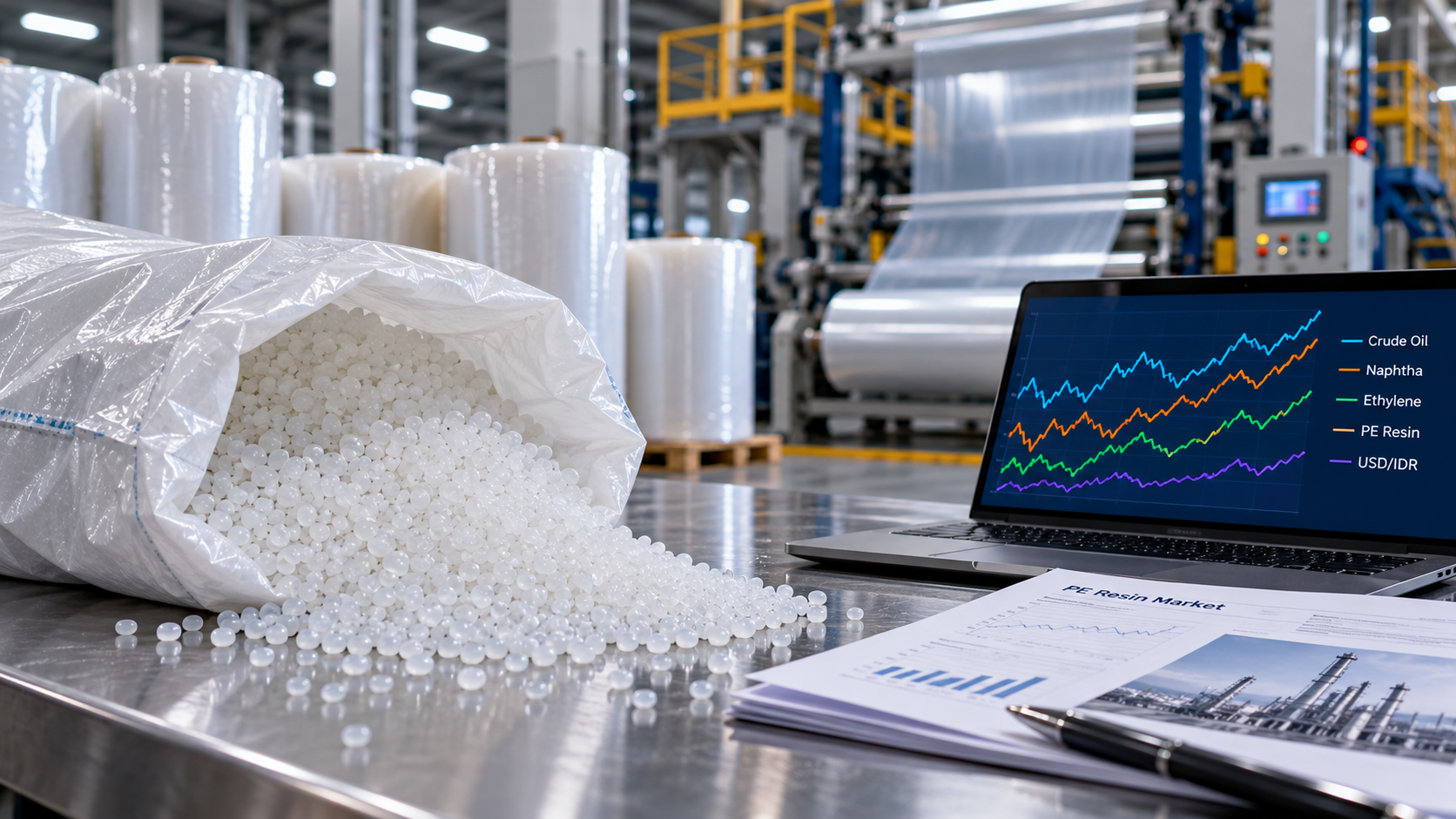
A weaker rupiah can create upward pressure on imported raw-material costs, but HDPE, LDPE, and LLDPE are also influenced by:
- International PE resin prices
- Ethylene and feedstock costs
- Crude oil and naphtha
- Ocean freight
- Plant shutdowns and maintenance
- Regional resin availability
- Converter demand
- Distributor inventories
- Import lead times
Exchange rates can therefore either amplify or offset other market movements.
If international resin prices rise while the rupiah weakens, Indonesian buyers may experience stronger cost pressure.
If resin prices fall in USD while the rupiah weakens, part of the benefit from lower international prices may be lost.
Does a Stronger Rupiah Automatically Mean Cheaper PE?
Not necessarily.
A stronger rupiah can help reduce import costs, but domestic PE prices still depend heavily on international resin-market conditions.
If polyethylene prices in USD increase because of tighter supply, higher feedstock costs, or production disruptions, currency appreciation may not be sufficient to reduce the local price.
Suppliers may also still be carrying inventory purchased at a higher replacement cost.
For this reason, domestic resin prices often move with a time lag relative to foreign-exchange movements.
Why Can HDPE, LDPE and LLDPE Behave Differently?
HDPE, LDPE, and LLDPE all belong to the polyethylene family, but their market conditions are not always identical.
For example:
- LDPE may face tight availability while LLDPE remains well supplied.
- Film grades may behave differently from injection or blow-molding grades.
- Different origins can face different freight costs and lead times.
A procurement team should therefore avoid asking only:
“Are plastic prices going up?”
A more useful question is:
“Which material, which grade, from which origin, with what availability and replacement cost?”
What Should Procurement Teams Monitor?
PE buyers should monitor several indicators together.
1. USD/IDR
Focus on the broader trend rather than individual daily movements.
2. International Resin Prices
Track the actual HDPE, LDPE, or LLDPE grade being purchased.
3. Feedstock Costs
Ethylene, naphtha, and crude oil can indicate upstream cost pressure.
4. Freight
Particularly important for imported resin.
5. Supplier Inventory
Determine whether offers reflect older inventory or newer replacement costs.
6. Lead Time
Longer lead times may require additional safety stock.
7. Production Requirements
Separate confirmed production needs from speculative purchasing.
Conclusion
A weaker rupiah can increase PE resin costs in Indonesia because USD-denominated raw materials become more expensive when converted into local currency.
However, exchange rates are only one part of the calculation. International resin prices, feedstock, freight, supply-demand, inventory, and replacement cost all contribute to the final material cost.
Procurement teams should therefore evaluate USD/IDR together with resin-market and supply conditions, rather than making purchasing decisions based solely on currency movements.
PT Dynaplast Mandiri monitors raw-material and market conditions as part of its production planning for HDPE, LDPE, and LLDPE industrial films and bags.