Terjemahan

Blown film extrusion turns polyethylene resin pellets into thin tubular plastic film. The process is widely used for packaging film rolls, tubing, sheets and material later converted into bags. Understanding its stages helps buyers specify gauge, width, winding, appearance and performance more effectively when working with a manufacturer.
Feeding and Melting the Resin
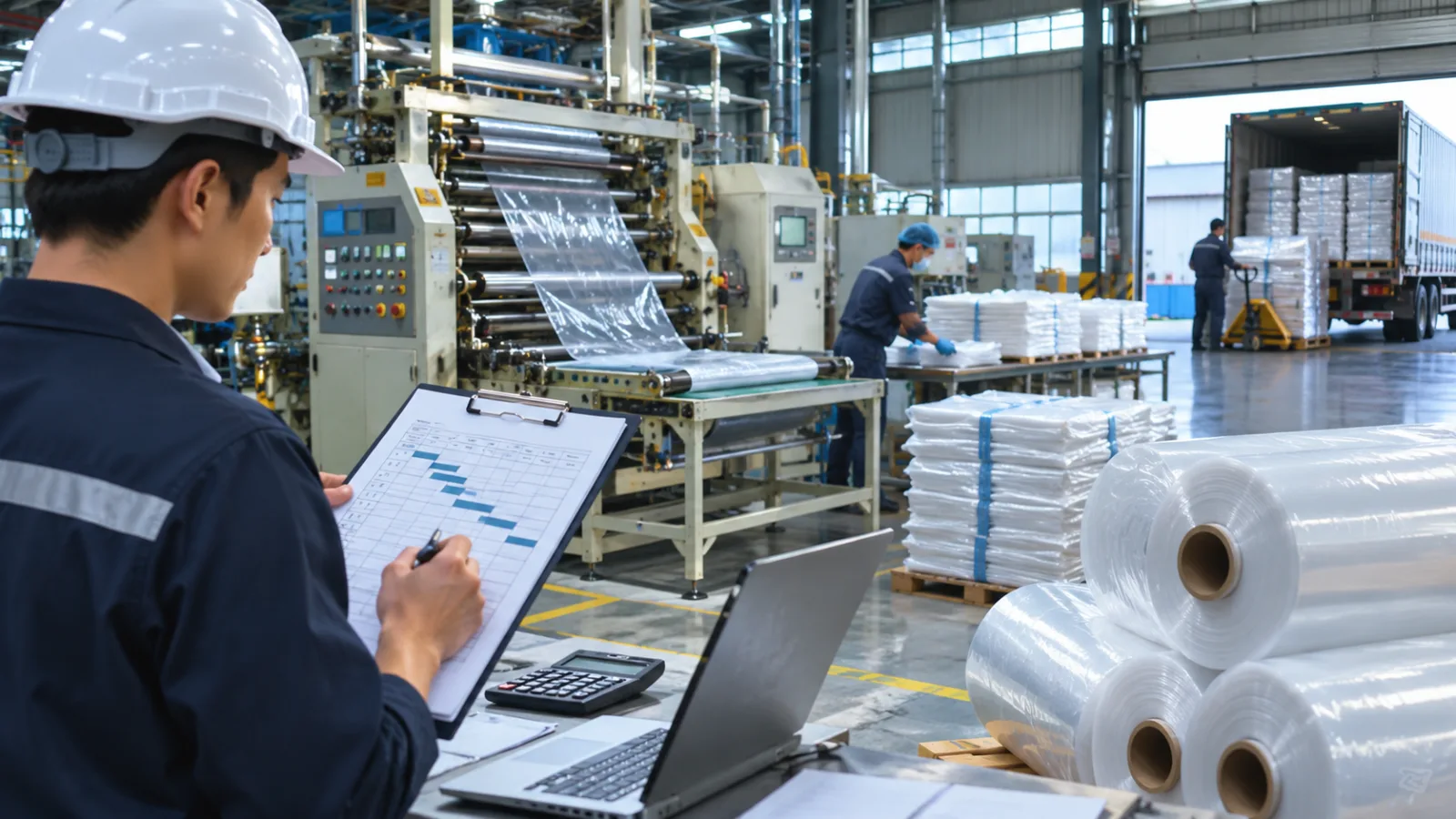
The process starts with choosing a suitable PE grade and preparing any needed additives, color masterbatch or blend components. Pellets enter a hopper and are moved through a heated barrel by a rotating screw. The screw melts, mixes and pushes the polymer toward the die. Stable melt temperature, feed rate and mixture uniformity influence the final film.
Forming the Film Bubble
Molten PE passes through an annular die and is inflated with air into a tubular bubble. Airflow, draw speed, cooling and bubble geometry affect layflat width and film gauge. An unstable bubble can lead to uneven thickness or folds. Nip rollers flatten the tubular film before it moves toward the winding section.
Cooling, Winding and Bag Conversion
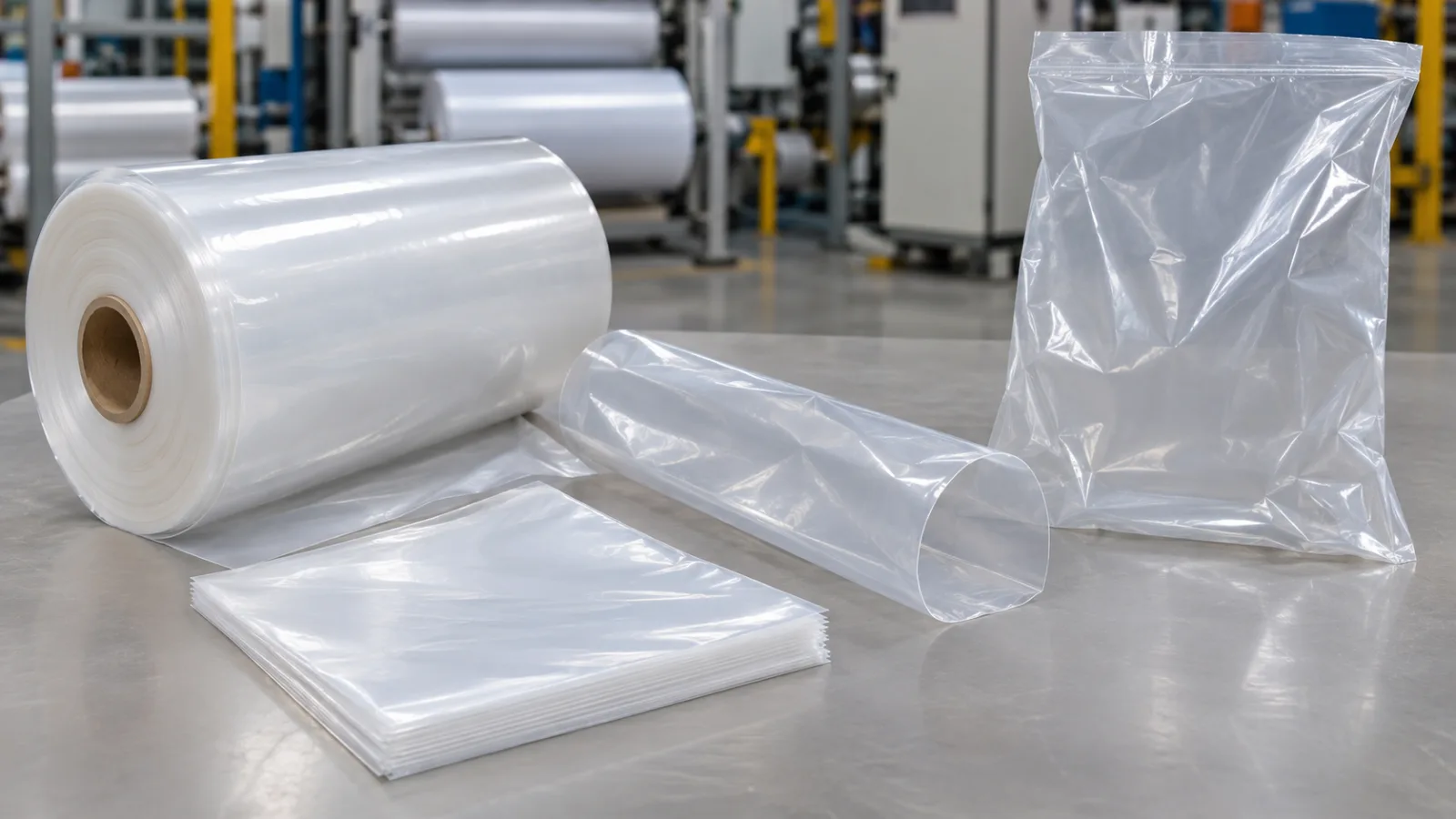
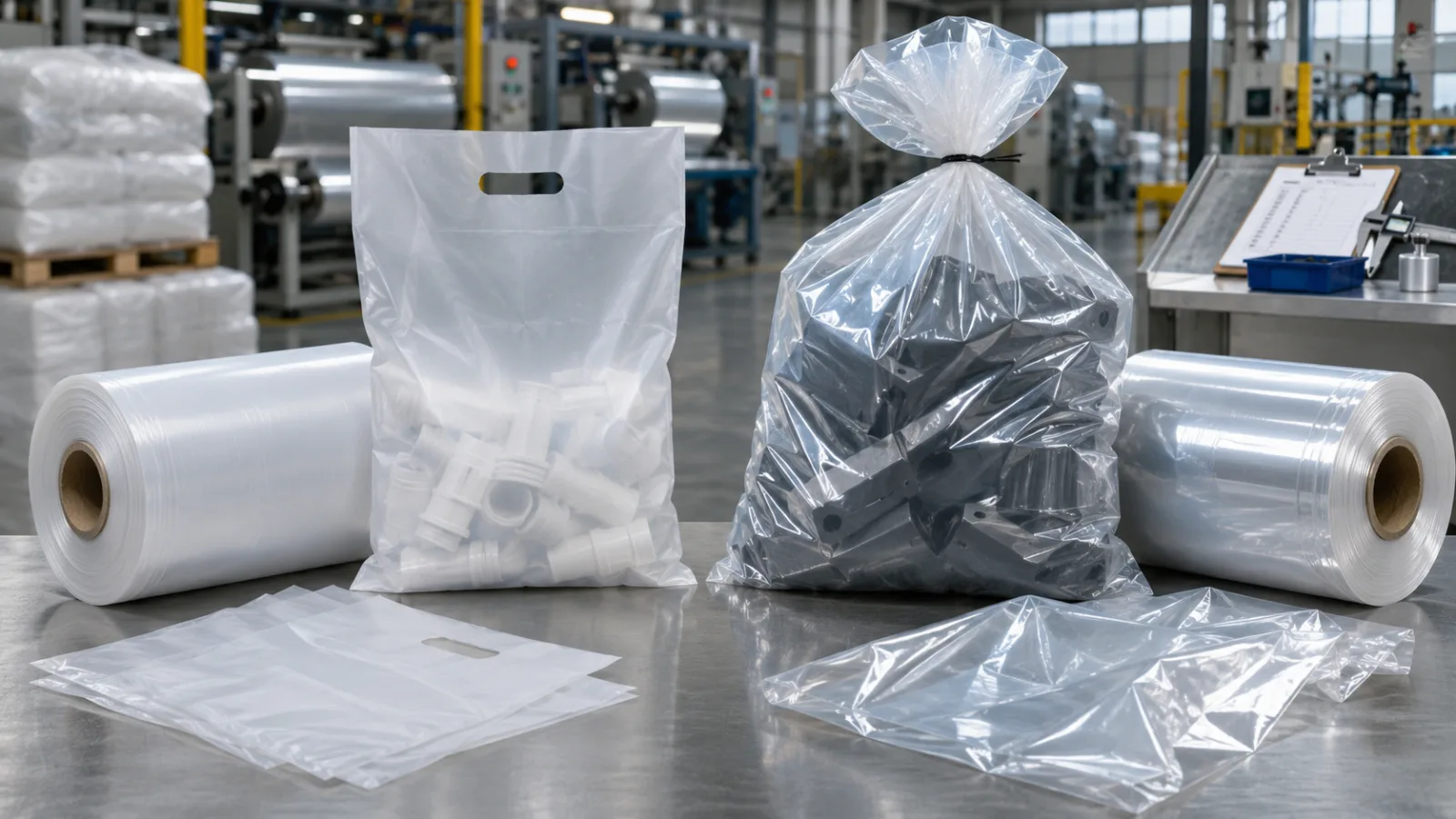
After cooling, the film is wound into rolls. Those rolls may then be cut into sheets, slit to narrower widths or converted into bags using cutting and sealing equipment. Processing conditions and surface properties influence later printing and sealing. Customers should identify all downstream steps before the production recipe is finalized.
What Does Quality Control Check?
Typical checks include web width, thickness distribution, surface appearance, roll condition and roll weight. Application-specific testing may address tensile properties, elongation, puncture, seal strength or dyne level. Agreeing on gauge tolerance and sampling methods is essential: the nominal micron number is a target, not an identical reading at every point.
Practical Purchasing Checklist
Before approving a sample or quotation, document the following parameters and check them against a real sample:
- Specify the intended use of the film before comparing quotations.
- Record layflat width, tubular or sheet format, target gauge and tolerance.
- Explain any printing, slitting, sealing or downstream conversion requirements.
- Confirm winding direction, core size, roll weight and any additives.
- Agree on the QC measurements that reflect the product's actual risks.
Blown film is not one universal formula. Resin grade, blow-up ratio, cooling and downstream conversion can produce different results. A representative production sample is more informative than comparing labels and nominal gauge alone.
Frequently Asked Questions
Are all PE bags made by blown film extrusion?
No. It is common for industrial bags, but other film technologies serve different applications.
Why does film gauge vary?
Melt distribution, bubble stability, cooling and process settings can affect gauge distribution.
Is all blown PE film printable immediately?
No. Certain printing systems require defined surface treatment and dyne levels.
What Buyers Should Take Away
Blown film extrusion links polymer selection to roll quality and final bag performance. Buyers who clearly describe the product, converting process and performance target are better positioned to obtain consistent, cost-effective packaging.
Explore Dynaplast’s industrial PE film and bags overview and product specifications for related material and format information.
Need PE film or bags to your specification? Contact Dynaplast Mandiri to discuss material, dimensions, thickness, and order volume.