Terjemahan

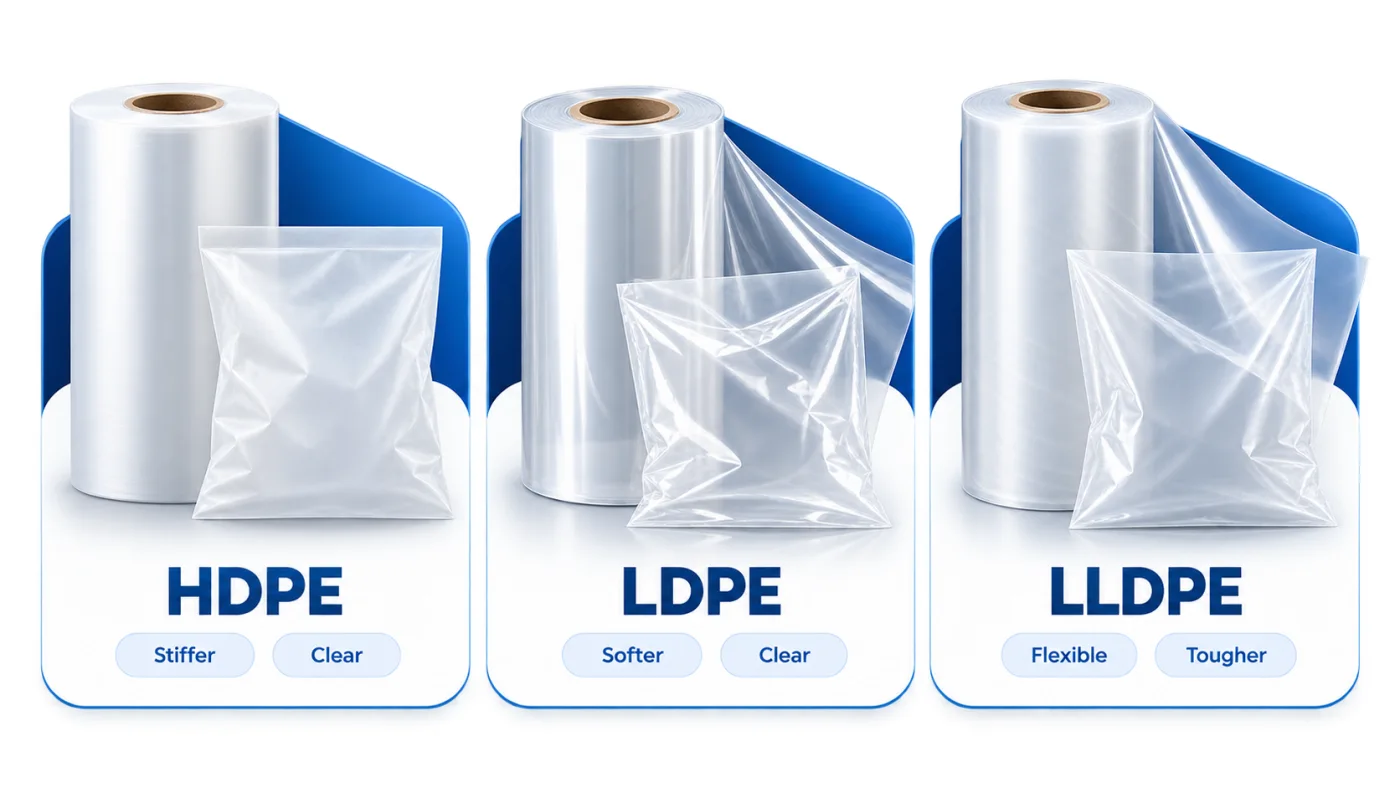
Choosing between HDPE and LLDPE for industrial bags requires more than comparing resin prices per kilogram. HDPE usually produces a crisper, stiffer film, while LLDPE often offers flexibility and toughness useful for heavier or irregularly shaped products. These characteristics affect how the bag handles during filling, lifting, stacking and shipping.
Where HDPE Fits
HDPE film typically feels stiffer than LLDPE, which can be useful for selected lightweight bags, liners, separators and relatively flat products. That does not mean HDPE leads in every strength measurement. If a bag must stretch around corners or tolerate repeated pulling, evaluate the specific grade and film orientation rather than relying on stiffness as a proxy for durability.
Why Buyers Consider LLDPE
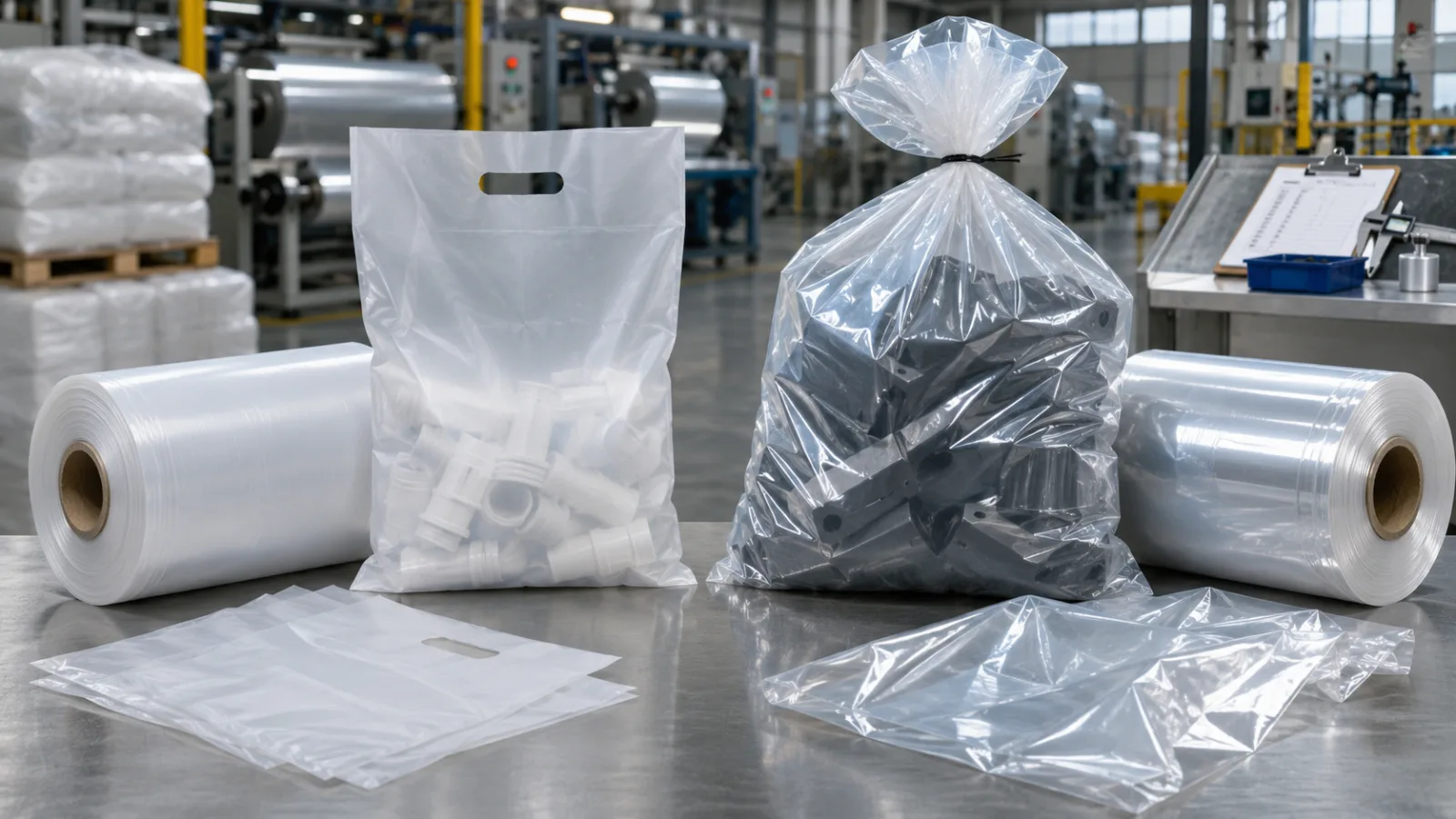
LLDPE is frequently chosen where the packaging may be stretched, compressed or exposed to puncture risk. Selected grades can combine good flexibility with useful puncture performance. For metal parts, sharp components and stacked loads, film selection should be considered alongside sealing quality, protective inserts and the overall package structure. A stronger film cannot correct every handling problem.
Compare the Cost per Delivered Unit
A lower resin cost does not guarantee the lower packaging cost. Film that tears repeatedly may create rework, returns and product damage. Conversely, over-specifying a premium material adds expense without creating value. Compare grams per bag, pieces per kilogram, defect rates and actual delivered-product costs. The right decision is commercial as well as technical.
Test the Real Application
For smooth, light products, start with filling, lifting and seal checks. Heavy or awkward products call for additional puncture, tear and seal-strength evaluation after handling. Resin grade, additives and blown-film conditions affect results. Keep an approved sample and a written inspection standard so production can reproduce the selected performance.
Practical Purchasing Checklist
Before approving a sample or quotation, document the following parameters and check them against a real sample:
- Specify net load per bag, bag dimensions and pieces per pack.
- Identify sharp edges, abrasion and expected film stretching.
- Compare HDPE and LLDPE samples with similar dimensions and gauges.
- Test sealing, stacking and normal lifting with actual products.
- Estimate effective packaging cost per usable delivered unit.
An industrial dust cover has different requirements from a bag that is expected to carry a substantial load. Define the function before asking a supplier to propose a minimum gauge. Avoid assuming a single film thickness is suitable for every application.
Frequently Asked Questions
Can HDPE be used for industrial bags?
Yes. Many applications work well with HDPE if their mechanical requirements are met.
Does LLDPE have to be thicker?
No. Gauge is selected to achieve required performance, not automatically assigned by polymer type.
Can HDPE and LLDPE be blended?
A tailored blend may balance properties and cost, subject to sample testing.
What Buyers Should Take Away
HDPE deserves consideration when stiffness and efficient material use suit the application. LLDPE is attractive for situations where flexibility and puncture resistance matter more. A realistic trial and cost-per-unit calculation provide the soundest basis for the purchasing decision.
Explore Dynaplast’s industrial PE film and bags overview and product specifications for related material and format information.
Need PE film or bags to your specification? Contact Dynaplast Mandiri to discuss material, dimensions, thickness, and order volume.