Terjemahan

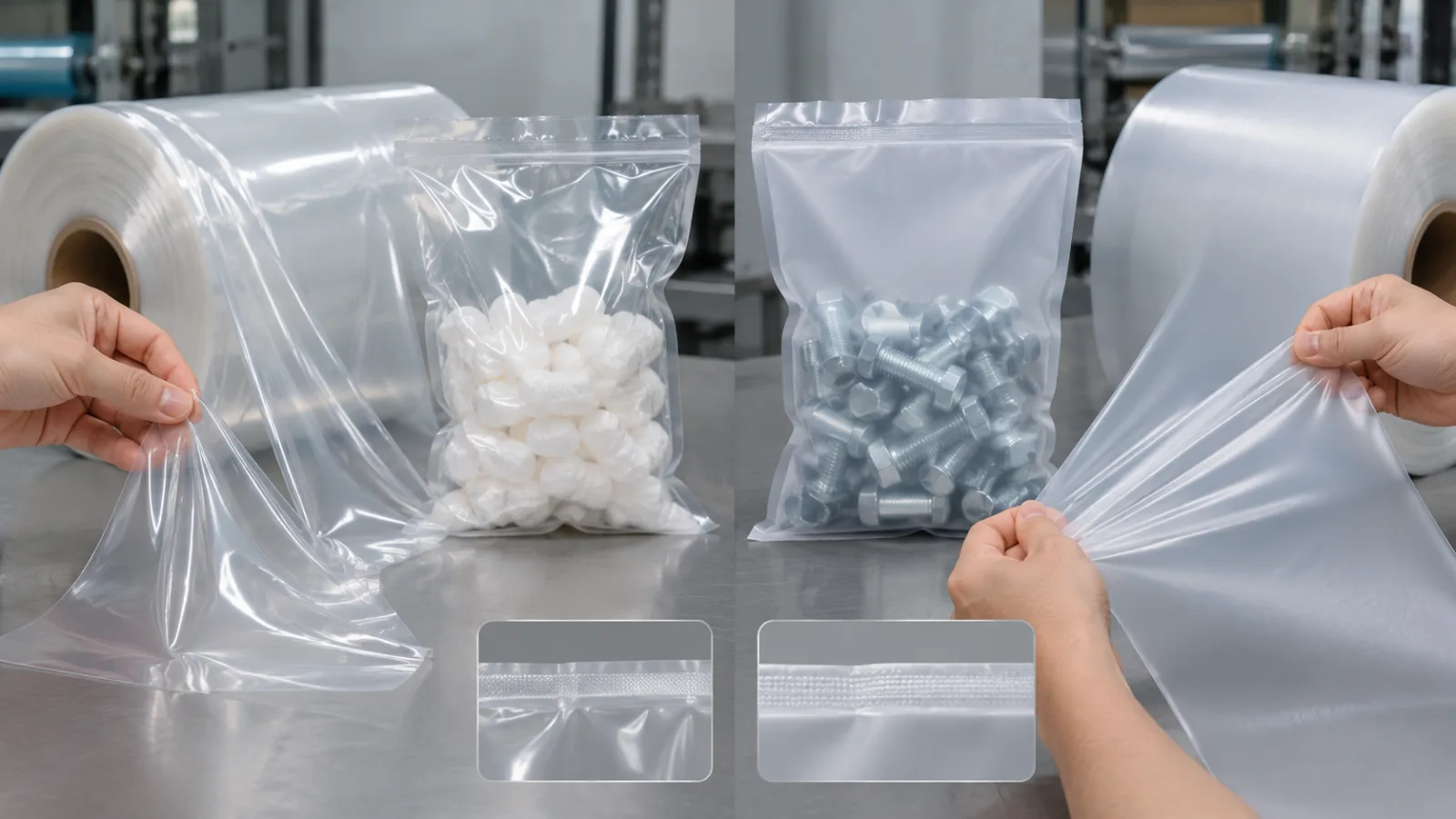
LDPE vs LLDPE is a frequent question when industrial buyers need a film that is flexible yet dependable in handling. Both are polyethylene, but resin structure, grade and formulation can produce noticeably different performance. LDPE commonly provides a soft, pliable feel. LLDPE is often selected when toughness and puncture resistance carry more weight. Neither is automatically superior; actual packing conditions should determine the choice.
How Do the Films Feel and Behave?
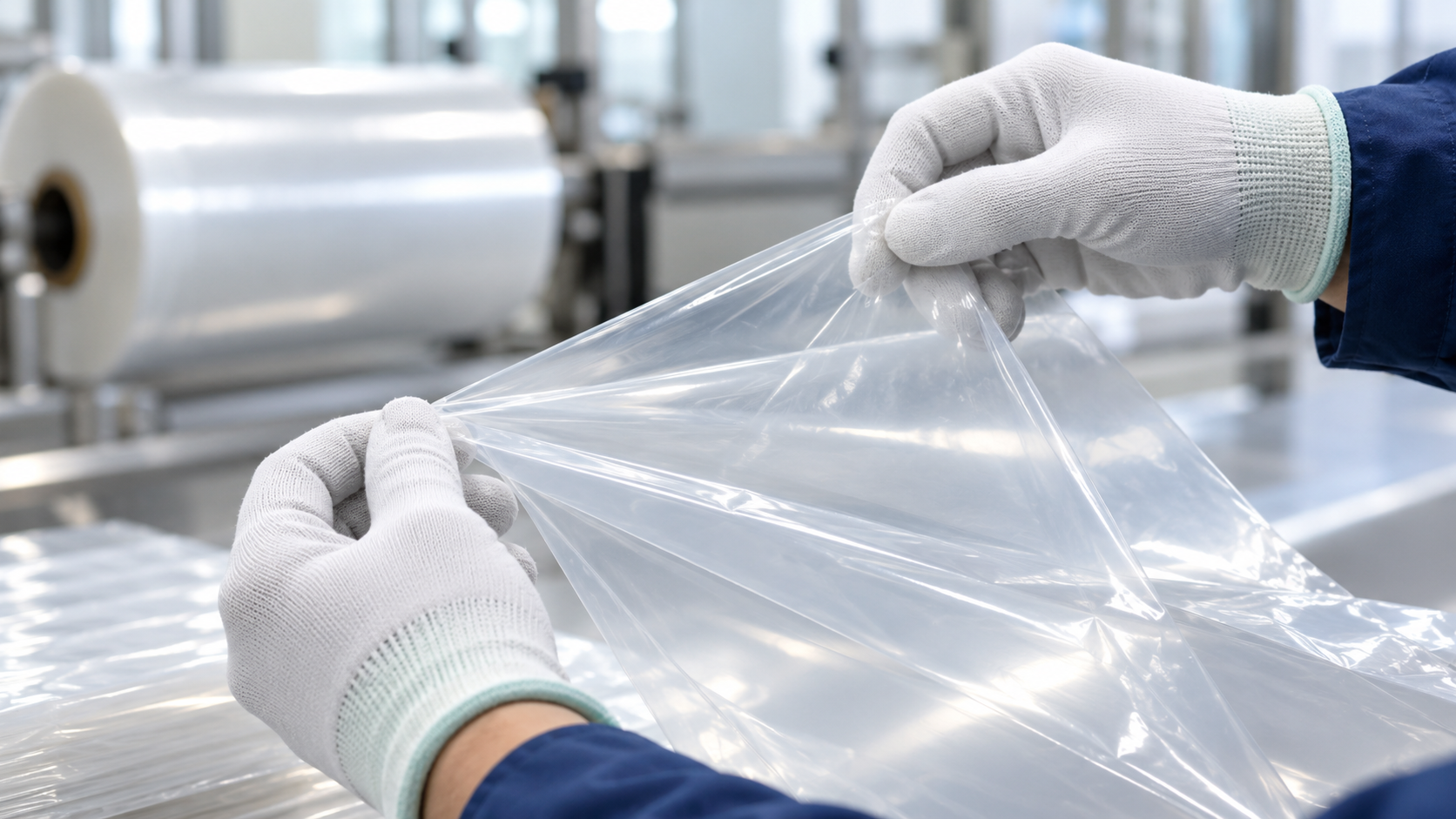
LDPE film is often softer and drapes easily around products, making it useful for liners, sheets and flexible wrapping. Many LLDPE grades combine flexibility with improved toughness or puncture resistance. Mechanical results still depend on machine and transverse direction, gauge, additives and the resin blend. Compare film samples at a similar thickness and test method rather than deciding from polymer names alone.
Thickness Is Not a Strength Guarantee
Two 50-micron films can behave differently against sharp edges, vibration or repeated handling. An appropriate LLDPE formulation may reduce puncture risk, but the bag design and film conversion process matter too. For unusually sharp items, consider corner protection or changes in loading. Simply increasing film thickness may add cost without addressing the underlying failure mode.
What About Heat-Seal Performance?
A reliable seal depends on temperature, contact time, pressure, surface cleanliness and actual film gauge. LDPE is commonly used in many heat-sealing applications, while selected LLDPE grades or blends can offer effective seal properties. Test sealed samples after cooling and under realistic filling loads. A film that feels strong in the hand may still fail if the sealing window is poorly controlled.
When Does a Blend Make Sense?
LDPE and LLDPE blends may balance processability, softness, toughness and cost. There is no universal blend percentage suitable for every order. Tell the producer your bag dimensions, product weight, sharp-edge risk, filling method, sealing equipment and transport conditions. Trial a representative sample before agreeing on a recipe or attempting downgauging.
Practical Purchasing Checklist
Before approving a sample or quotation, document the following parameters and check them against a real sample:
- Record the polymer grade, nominal micron thickness and acceptable gauge tolerance.
- Describe product mass, sharp edges, vibration and stacking conditions.
- Decide whether softness, puncture resistance, seal strength or cost is the key priority.
- Test the film using the actual product and sealing machine.
- Agree on incoming quality checks and the approved reference sample.
For a fair comparison, keep dimensions, thickness, bag structure and testing conditions consistent. If two samples have different designs, performance differences cannot necessarily be attributed to polyethylene chemistry. Store approved samples so repeat orders can be checked against the same standard.
Frequently Asked Questions
Is LLDPE always stronger than LDPE?
No. Some LLDPE grades perform better in certain tests, but results depend on the full formulation and testing direction.
Should heavy bags always use LLDPE?
It is often worth evaluating, but seal design, load distribution and handling conditions still need review.
Can LDPE and LLDPE be blended?
Yes. Blending is common, provided process compatibility and the final package performance are validated.
What Buyers Should Take Away
Use LDPE when a softer and more conformable film is important. Evaluate LLDPE or a suitable blend when toughness and puncture protection are greater concerns. The most reliable buying decision is based on a clear target specification and a trial under actual conditions.
Explore Dynaplast’s industrial PE film and bags overview and product specifications for related material and format information.
Need PE film or bags to your specification? Contact Dynaplast Mandiri to discuss material, dimensions, thickness, and order volume.