Terjemahan
PE resin prices can move significantly even when the material specification remains unchanged. HDPE, LDPE, or LLDPE may rise sharply during one period and remain weak during another—even when crude oil is moving in the opposite direction.
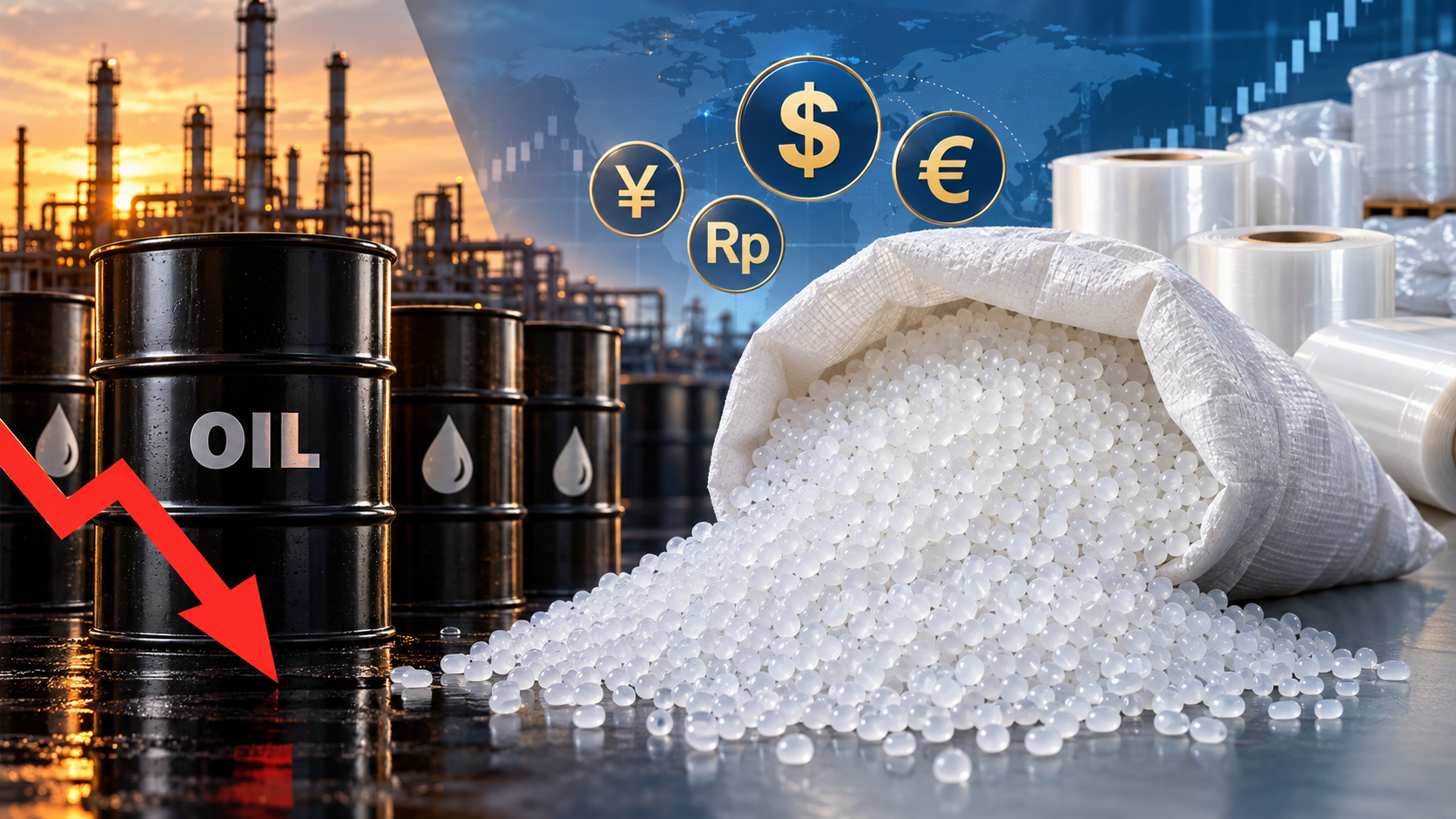
This happens because polyethylene pricing is influenced by an entire value chain:
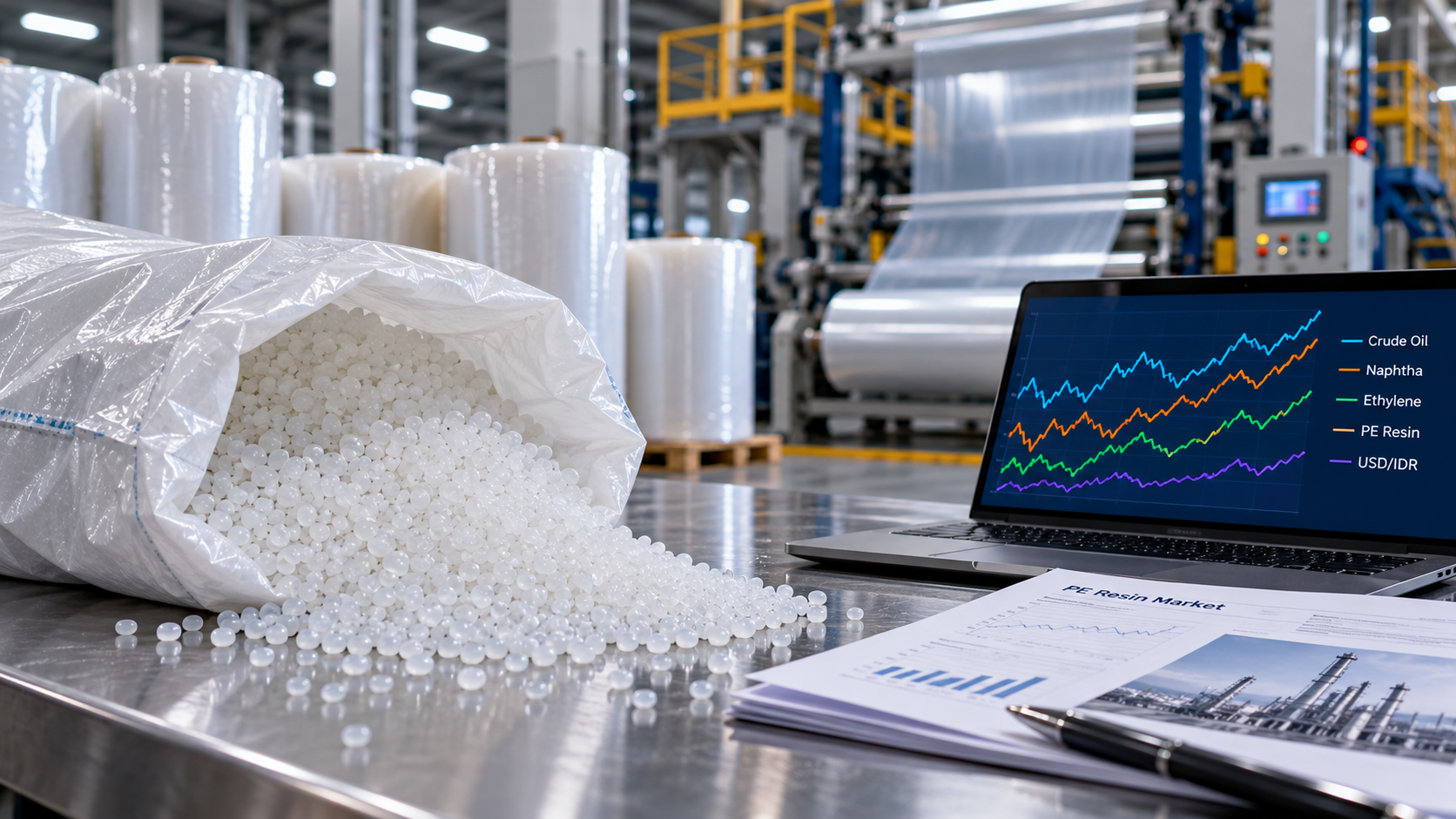
Crude Oil → Naphtha / Feedstock → Ethylene → PE Resin → Freight & Import Costs → Currency → Local Price
Understanding this chain helps industrial buyers make better procurement and inventory decisions.
1. Crude Oil Matters, but the Relationship Is Not Direct
In Asia, naphtha is an important feedstock for steam crackers. These crackers produce ethylene, one of the key building blocks used to manufacture polyethylene.
Because naphtha is derived from petroleum refining, higher crude oil prices can increase the cost base of naphtha-based petrochemical production.
However, PE does not move one-for-one with crude oil.
Different regions also use different feedstocks. U.S. producers, for example, rely heavily on ethane derived from natural gas. The U.S. Energy Information Administration explains that ethane is cracked into ethylene, which is then commonly polymerized into polyethylene.
This means the production economics of Asian naphtha-based PE can differ significantly from ethane-based PE produced elsewhere.
2. Ethylene Is More Directly Connected to PE
For PE buyers, ethylene is often a more useful upstream indicator than crude oil alone.
When naphtha becomes more expensive, cracker availability falls, or ethylene supply tightens, polyethylene production costs may increase.
But higher feedstock costs do not guarantee an immediate PE increase. Producers still need the market to absorb higher prices.
Asia in 2026 provides a useful example. In May, PE prices declined alongside weaker ethylene costs, soft downstream consumption, and oversupply. By July, PE moved higher as naphtha and ethylene values strengthened.
The relationship therefore changes depending on market conditions.
3. Supply and Demand Can Override Feedstock Movements
Resin pricing reflects both production cost and market balance.
Supply may tighten because of:
- Steam cracker turnarounds
- Polymer plant shutdowns
- Reduced operating rates
- Import disruptions
- Shipping constraints
- Low distributor inventories
Additional capacity, high producer operating rates, or aggressive imported cargoes can have the opposite effect and pressure prices lower.
Demand is equally important.
When converters operate at reduced rates and purchase only immediate requirements, resin producers may struggle to pass higher production costs downstream.
This was visible in Asia during September 2026. Crude above $100/barrel and higher naphtha costs lifted petrochemical prices, while weak end-user demand prevented a broad recovery in downstream margins.
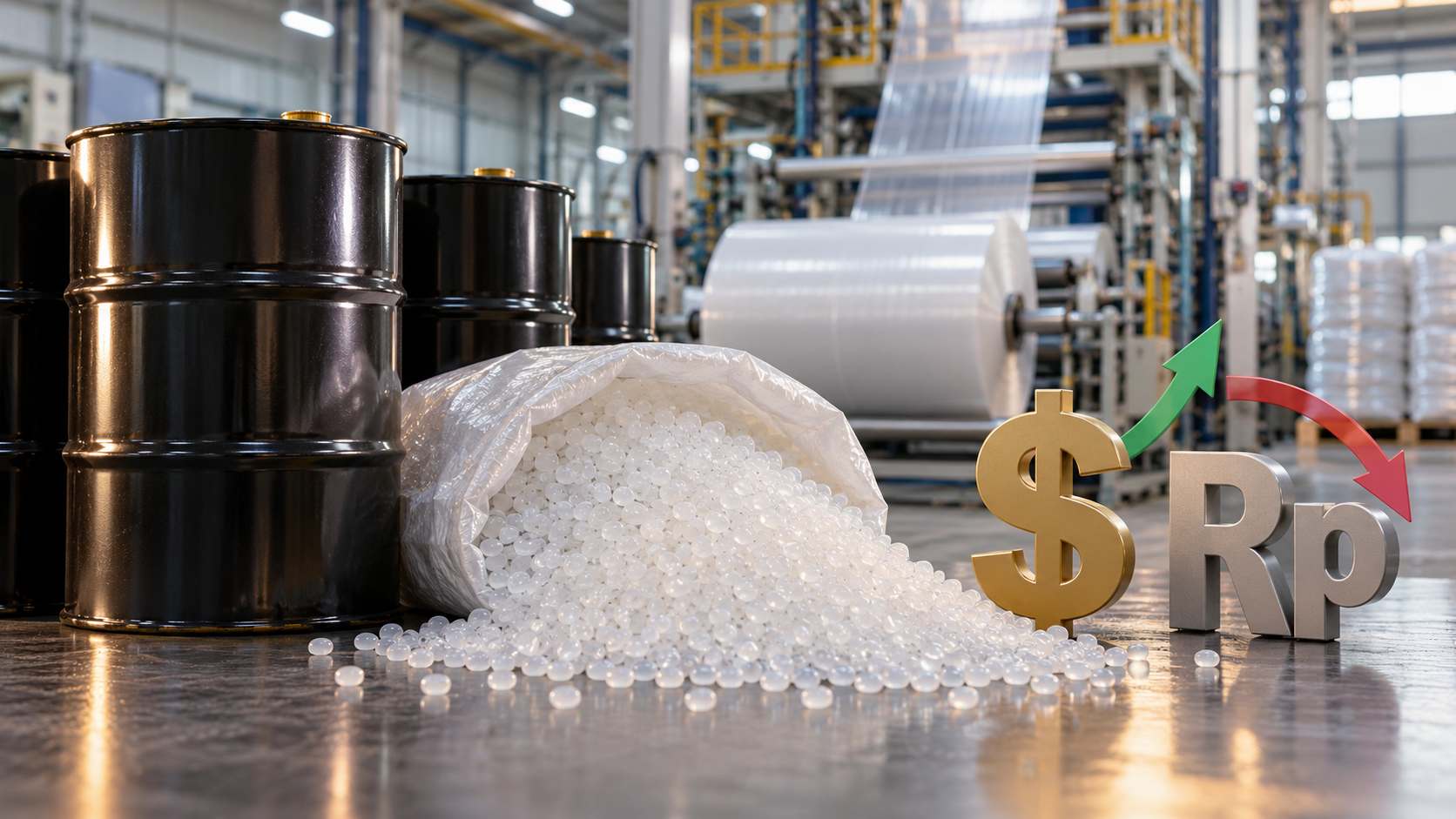
4. USD/IDR Matters for Indonesian Buyers
International resin transactions are commonly denominated in U.S. dollars.
For an Indonesian converter, this means a stable USD resin price can still become more expensive in rupiah if the IDR weakens against the USD.
Bank Indonesia’s JISDOR, for example, moved from Rp17,635/USD on 14 September to Rp17,917/USD on 25 September 2026.
Currency can therefore either amplify or offset international resin-price changes.
A stronger rupiah may reduce import cost, but it may not fully compensate for rising polymer prices, freight, or financing costs.
5. Freight, Inventory, and Replacement Cost
The resin price offered by a local distributor may not immediately reflect today’s international market.
Existing warehouse inventory may have been purchased at an older cost.
If replacement cargoes are significantly more expensive, suppliers may adjust selling prices based on replacement cost before the previous stock is completely depleted.
Freight also matters. Longer shipping routes, limited vessel availability, insurance costs, and logistical disruption can increase the final landed cost independently of resin production economics.
HDPE, LDPE and LLDPE Do Not Always Move Together
Polyethylene should not be treated as one single market.
LDPE may be tight while HDPE remains readily available. LLDPE film may also experience a different balance from HDPE film, injection, or blow-molding grades.
Recent Asian reports have shown specific film grades experiencing shortages and premiums while purchasing sentiment in other PE segments remained cautious.
For buyers, the better question is not simply:
“Is PE going up?”
It is:
“Which grade, from which origin, with what availability and replacement cost?”
What Should PE Buyers Monitor?
Procurement teams should monitor:
- Crude oil and naphtha
- Ethylene prices
- Grade-specific PE prices
- USD/IDR
- Freight costs
- Plant outages and turnarounds
- Supplier inventory and lead time
- Downstream demand in China and Asia
Conclusion
PE resin prices are determined by the interaction of feedstock costs, ethylene, production capacity, supply-demand, currency, freight, and inventory.
Higher crude oil can raise production costs, but it does not mean polyethylene will rise by the same percentage—or immediately. Tight resin availability can also lift prices even when demand remains relatively weak.
For industrial buyers, monitoring several indicators together provides a much clearer picture than reacting to crude oil headlines alone.
PT Dynaplast Mandiri monitors raw-material market conditions as part of its production planning for HDPE, LDPE, and LLDPE industrial film and bags.